
There is enough quality in World Cup Group F and the weaker sides also possess some defensive discipline and the potential to raise their game, which makes this an interesting group to watch. Three of the four teams could make it to the knockouts.
The Netherlands
The Netherlands arrive at the World Cup unbeaten in qualification and with a squad that appears deeper than at any point since their run to the 2014 semi-finals. Ronald Koeman’s side secured top spot ahead of Poland on the final matchday with a comfortable victory over Lithuania, continuing the recovery that followed their failure to qualify for Russia 2018.
There is a lot of quality there. Frenkie de Jong’s passing in central midfield is a big advantage. Few midfielders in world football progress the ball through pressure as effectively, and his ability to carry possession from deep often helps the Dutch build their attacks. Then there are Ryan Gravenberch and Tijjani Reijnders, one providing defensive cover and the other able to provide attacking thrust.
The ability of the Dutch on the ball means that players like Gravenberch will be doing just as much offensive work as defensive, and the Liverpool man has shown that he can contribute at both ends of the table.
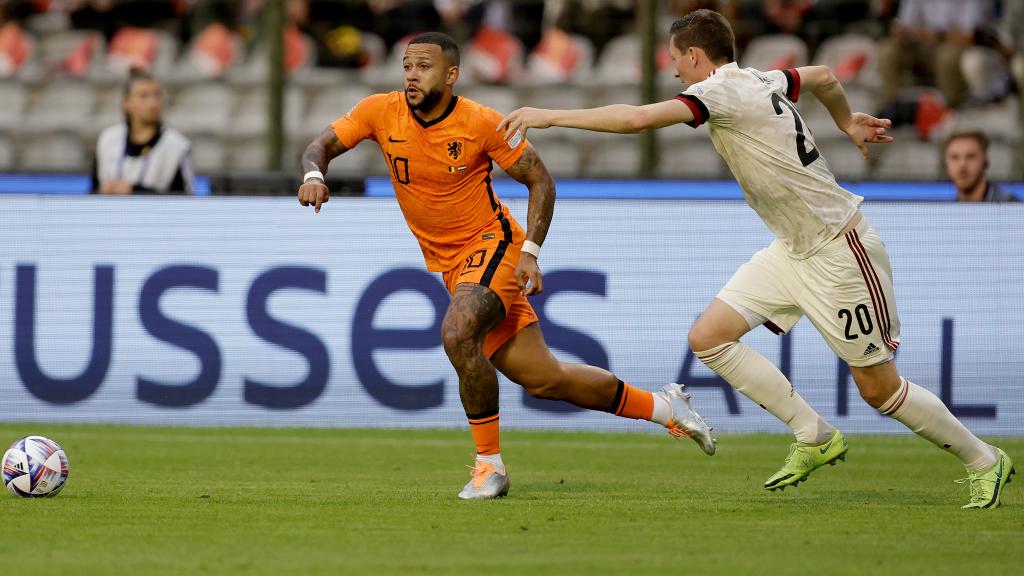
However, there is still a reliance on Memphis Depay in attacking areas, which may not quite be enough to come out on top against the bigger sides. The Dutch have enough talent to dominate Group F. The question is whether they are strong enough to beat elite opposition deep into the tournament.
Japan
Japan qualified earlier than any non-host nation, winning 11 games and losing only once across 16 qualification matches. The next objective is obvious. Japan have reached the knockout rounds repeatedly since debuting in 1998, but the quarter-finals remain elusive despite performances suggesting they are close to crossing that threshold. They led Belgium 2-0 in the last 16 in 2018 before collapsing late, then defeated both Germany and Spain in Qatar four years later before losing on penalties to Croatia.
This group may be better equipped than any previous Japanese side to finally advance further. Coach Hajime Moriyasu has overseen much of this generation’s development from youth level upward, creating unusual continuity between the under-23s and senior team. The result is a team able to play instinctively as a team regardless of who starts and who does not. Tactically, Japan play a quick game with intense pressing and fast passing, staying compact against stronger nations and looking to hit back on the counterattack.
Kaoru Mitoma has struggled with injuries and captain Wataru Endo has not been a regular at club level. But Japan are really more about the collective than individual big names. They are highly likely to qualify for the knockouts but the question is how far they can progress beyond the last 16.
Sweden
Sweden almost failed to qualify for the 2026 World Cup. They did not win any of their initial qualification matches, only advancing through the Nations League pathway before defeating Ukraine and Poland in play-off ties.
This group have been referred to by some as Sweden’s strongest generation in years, but there are quite a number of injury problems to deal with. Both Dejan Kulusevski and Alexander Isak have barely played for their clubs this season, although Viktor Gyokeres is a recent Premier League winner and his goals will be vital to the team if he can also have a good summer tournament.
There are midfielders such as Lucas Bergvall and Yasin Ayari. On the flanks, Anthony Elanga provides pace. So there is some quality in the squad but the problem is that there are just too many vulnerabilities and coach Graham Potter would have to do a serious amount of tactical work if Sweden are to compete seriously in the knockout stages.
Tunisia
Tunisia qualified with minimal difficulty, topping their African qualifying group without conceding a single goal across 10 matches. But they will have to show they can offer strong enough performances on the global stage. Tunisia have been World Cup regulars since 1998 but have never progressed beyond the group stage. There was a near-miss in Qatar where victory over France briefly appeared enough before Australia’s win against Denmark pushed them back down, but at least it showed they can be competitive.
Tunisia are solid defensively on continental level. Clean sheets formed the basis of qualification and several of their wins came through narrow margins. Their structure is compact, disciplined and difficult to break down but they offer little creatively. Teams who struggle to score will struggle to win and Tunisia will need to win games if they are to emerge from Group F and compete in the knockouts. Their defensive abilities will also be put to the test against the tournament’s stronger sides and they will have to prove they are strong enough to contain that threat.