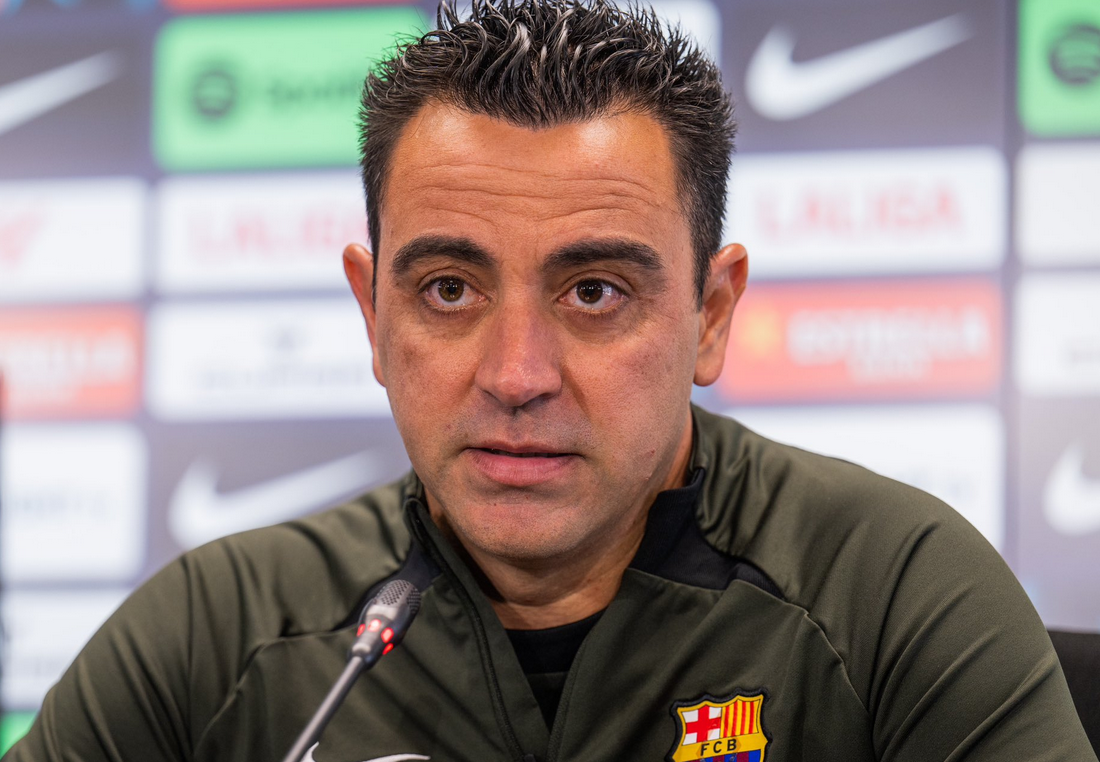
After two years away from management, Xavi Hernández is back in the dugout, and his latest challenge could hardly be more intriguing.
The former Barcelona midfielder has been appointed as the new Netherlands head coach, taking over from Ronald Koeman with a four-year mandate to restore the Oranje to the top table of European and world football.
The appointment is an intriguing fit on paper. While Roberto Martínez had initially appeared to be the leading candidate for the job, the Dutch federation ultimately turned to a coach whose footballing education is deeply connected to the Netherlands.
Xavi grew up at Barcelona under the influence of Johan Cruyff and Rinus Michels, while Louis van Gaal and Frank Rijkaard also played important roles in shaping his understanding of the game. His connection to Dutch football therefore goes beyond simply admiring its philosophy.
“I consider it a tremendous honour to become head coach of the Dutch national team,” Xavi said after his appointment. “As someone who received his training at Barca’s academy, with strong influences from Johan Cruyff and Rinus Michels, among others, I feel a special connection to Dutch football.”
That makes the Netherlands an obvious destination for Xavi, but it also raises expectations. The Oranje have plenty of talent, yet they have consistently struggled to turn that quality into major international success in recent years.
We proudly present our new head coach. 🇳🇱⁰⁰Welcome, Xavi Hernández! 🧡#NothingLikeOranje #Xavi2030 pic.twitter.com/9aOpc9J53S
— OnsOranje (@OnsOranje) August 12, 2026
Xavi’s Football Could Transform the Oranje
Xavi’s arrival is likely to bring a significant tactical shift.
The Spaniard has traditionally favoured a 4-3-3, prioritising possession, positional play and aggressive pressing. His teams look to control matches through the ball while maintaining a high defensive line and attempting to win possession back quickly.
There are also clear influences from Pep Guardiola in his tactical thinking. Xavi has experimented with structures such as a 3-2-2-3 and 2-3-5, often asking a full-back to move inside and create a numerical advantage in midfield.
The idea is to manipulate space rather than simply move the ball from one side of the pitch to another.
One winger can stay wide to stretch the opposition, while an additional midfielder occupies the half-space. Elsewhere, another player can push forward to create an overload in the final third.
It is a system that could suit a Netherlands squad traditionally built around technically gifted players comfortable in possession.
Xavi Hernández, head coach Oranje. 🔶#NothingLikeOranje #Xavi2030 pic.twitter.com/q5gpajYoga
— OnsOranje (@OnsOranje) August 13, 2026
Xavi will therefore have the freedom to build around the Oranje’s strengths rather than forcing them into a rigid system. That could be one of the biggest differences between his approach and that of Koeman.
Why Xavi Has a Point to Prove
Replacing Koeman will not be straightforward, particularly because the former Netherlands international also comes from the same footballing tradition that Xavi represents.
Koeman was criticised during his second spell for adopting a more cautious approach, including the use of 5-3-2 and 5-2-3 formations during Euro 2024 and the World Cup qualifying campaign.
That does not mean Koeman was unwilling to attack. His teams could become extremely aggressive when they had control of matches, but his willingness to use a back five sometimes appeared at odds with the traditional Dutch football philosophy.
Xavi is unlikely to have the same reservations.
His approach will almost certainly be more adventurous, with greater freedom for attacking players and an emphasis on positional rotations. That could make the Netherlands more exciting to watch, but it also carries risks.
His Barcelona tenure demonstrated that attacking football and positional freedom can occasionally leave a team vulnerable. Xavi’s side sometimes surrendered matches they appeared capable of winning comfortably, particularly when their aggressive approach was punished in transition.
That is the biggest question facing him with the Netherlands: can he maintain the attacking identity without sacrificing the defensive balance required at international level?