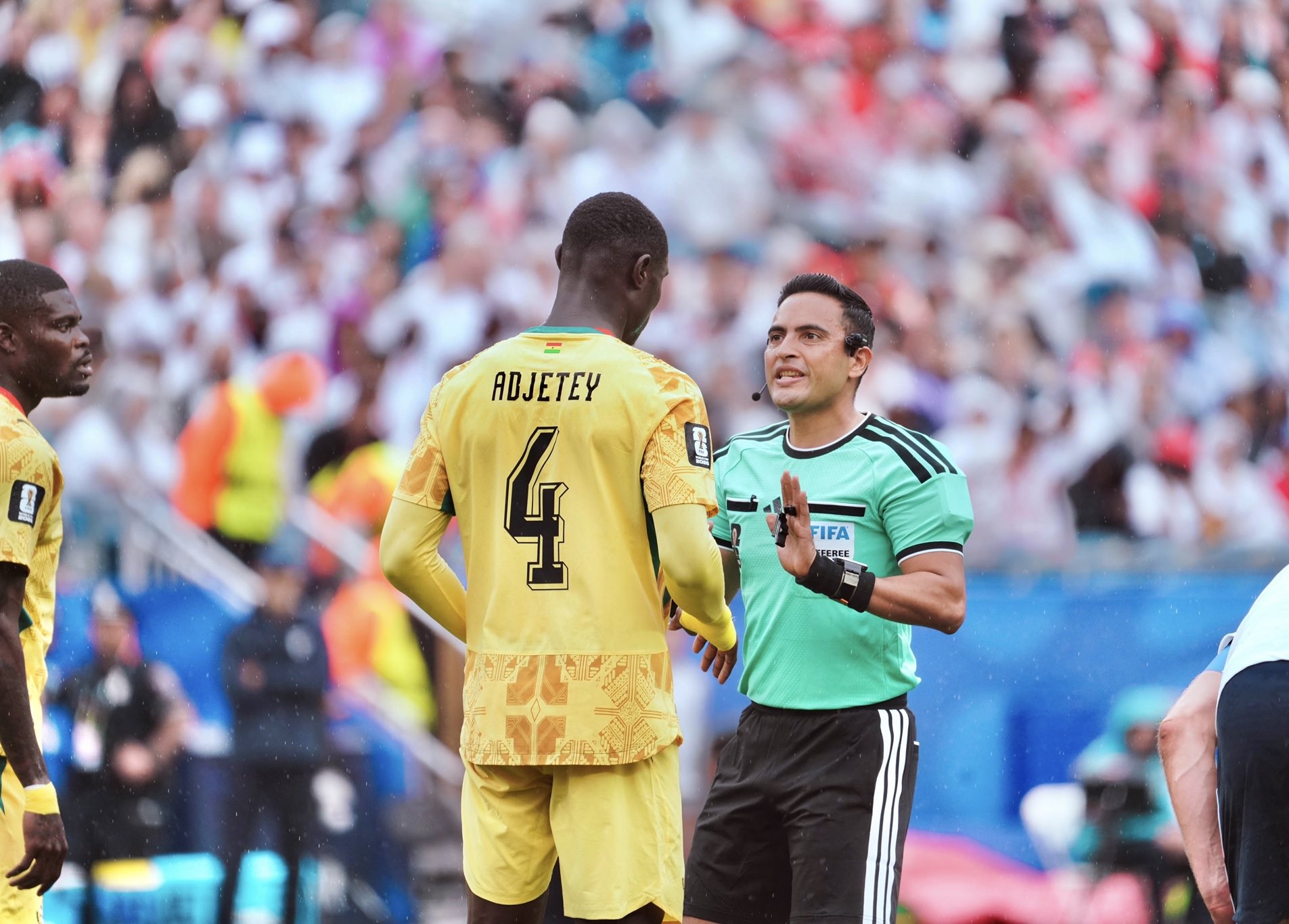
There were two controversial calls in Tuesday’s goalless draw in Group L
Ghana coach Carlos Queiroz has mocked VAR and said it was non-existent because it failed to intervene in two key incidents during Ghana’s goalless World Cup draw with England.
There were two controversial calls on Tuesday. Jordan Pickford avoided a red card for a challenge on Prince Adu before Ezri Konsa escaped punishment for a late tackle on the same player when he appeared through on goal.
Queiroz said Pickford’s challenge after 66 minutes should have resulted in England being reduced to 10 men.
“It was a clear shock,” the Ghana coach said. “He should have been sent off. There is no doubt about that.”
The second incident came 12 minutes from time when Konsa challenged Adu inside the penalty area. Ghana believed the defender had brought down the forward without making sufficient contact with the ball, but neither the referee nor VAR awarded a penalty.
Wayne Rooney said on the BBC’s coverage that England had been fortunate not to concede a spot-kick.
“It’s a penalty,” Rooney said. “He takes a huge risk. He gets the man, not the ball.”
In his post-match press conference, Queiroz said: “Is VAR still working in the World Cup? Do we still have VAR? I have doubts about that.”
He later added: “The VAR referee was on vacation second half, apparently.”
“Once again, the VAR went for coffee. I like to take my coffees once in a while. It’s a clear penalty and a red card. Do you have any doubts about that, or is it only me who was at the game?”
England and Ghana both came into the game with three points having beaten Croatia and Panama respectively, but match favourites England found the African side difficult to break down. Queiroz’s side were compact and restricted the Three Lions to scraps of chances until the ending when England went close on a few occasions.
Nevertheless, Ghana will have cause to be aggrieved that officiating did not go their way, which could have given them a decisive lead.
At the end of his press conference, Queiroz suggested his comments were deliberately light-hearted to avoid disciplinary consequences.
“I am sorry for my sarcasm,” Queiroz said, “but if I say this kind of thing seriously, they punish me. So I am joking.”