
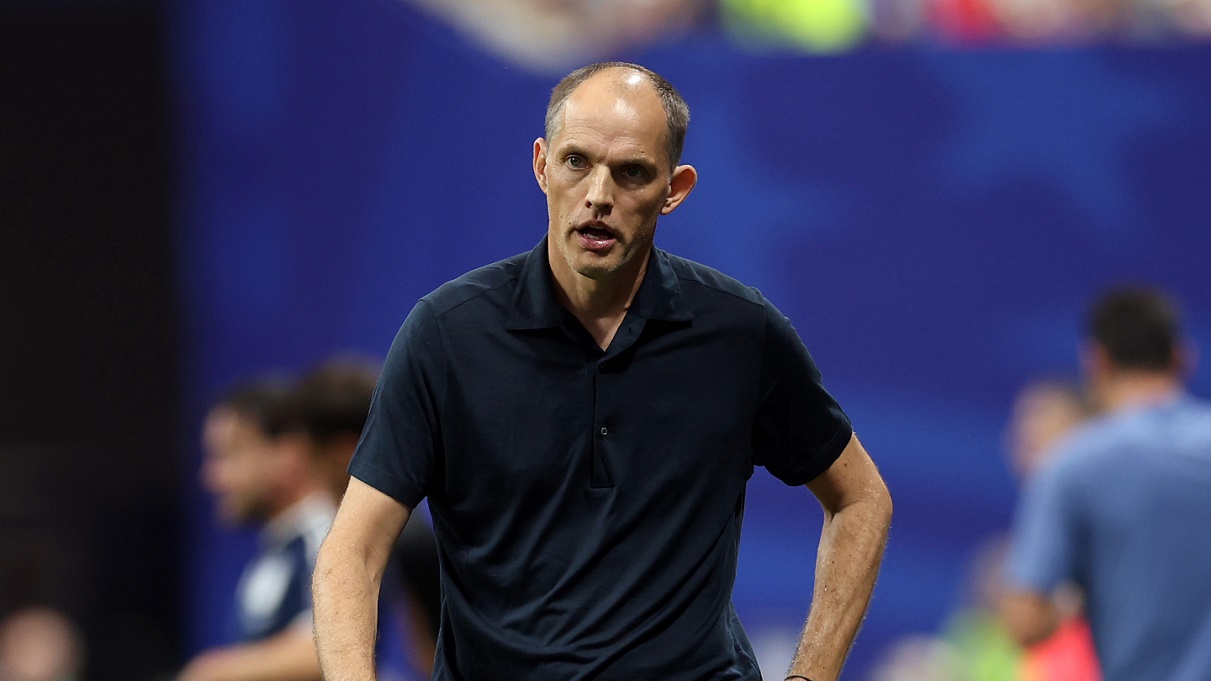
Thomas Tuchel’s cautious tactics and defensive substitutions cost England a place in the 2026 World Cup final.
England’s 2026 World Cup campaign ended in familiar fashion. After another deep run at a major tournament, England fell just one step short of the final, losing to defending champions Argentina in the semi-finals.
It was another painful exit for a nation that has repeatedly flirted with glory without getting over the line. While reaching the last four is an achievement, England appointed Thomas Tuchel for one reason: to win the biggest prizes.
Argentina are headed back to the #FIFAWorldCup Final 🇦🇷
— FIFA World Cup (@FIFAWorldCup) July 15, 2026
That expectation was built on the foundation left by Gareth Southgate. During his eight-year spell, Southgate transformed England into consistent contenders, guiding them to the 2018 World Cup semi-finals, the Euro 2020 final, the 2022 World Cup quarter-finals, the Euro 2024 final, and now leaving behind a squad capable of competing with anyone.
Yet despite those deep runs, England failed to win a major tournament. Tuchel’s appointment was supposed to be the final piece of the puzzle, the coach who would turn near misses into trophies.
Instead, England’s World Cup ended with many of the same frustrations. Throughout the tournament, they never fully convinced as a team. There were flashes of quality, but too often they relied on moments of individual brilliance rather than sustained attacking football. Against Argentina, that formula was finally exposed.
The biggest issue, however, was not England’s overall tournament performances but Tuchel’s approach in the semi-final itself.
For much of the game, England matched Argentina. Neither side dominated completely, and after taking the lead, England looked capable of managing the contest. Rather than building on that momentum, though, Tuchel’s side retreated deeper and deeper, inviting relentless Argentine pressure.
Instead of controlling possession and pushing for a second goal, England abandoned the approach that had earned them the advantage.
Some will argue the players naturally dropped back, but that is exactly where a manager earns his reputation. Tuchel had opportunities to change the momentum, particularly during the hydration break and substitutions.
Rather than encouraging his team to press higher and regain control, he reinforced the defensive mindset. His substitutions reflected that thinking, adding defensive security instead of attacking ambition. England effectively defended with almost seven defensive-minded players for a significant spell, surrendering both territory and initiative.
Thomas Tuchel had all 11 England players behind the ball after they took the lead.
Fell short just minutes away from seeing it out 😬 pic.twitter.com/daGm9hVkeF
— ESPN FC (@ESPNFC) July 15, 2026
When Argentina eventually turned the game around in a devastating five-minute spell, Tuchel finally reacted by introducing attacking options such as Marcus Rashford and Ivan Toney. By then, however, the damage had already been done.
Those attacking changes felt like corrections to an earlier mistake rather than proactive decisions. Had they arrived sooner, England may have regained control or at least posed enough attacking threat to stop Argentina from committing so many players forward.
Tuchel has since insisted England produced one of their best performances, but the result tells a different story. Football at this level is about managing moments, and England failed to manage the most important one.
Former England players, pundits and sections of the English media have all questioned the German’s game management, and it is difficult to disagree. Protecting a one-goal lead for almost 30 minutes against the reigning world champions was an enormous gamble, and one that ultimately backfired.
England undoubtedly have one of the most talented squads in world football, and their journey to another semi-final proves that. But the margins between success and failure at major tournaments are incredibly small.
Tuchel was hired because he had a reputation for making decisive tactical calls on the biggest stage. Against Argentina, his biggest decisions arguably cost England their place in the World Cup final.
🚨🏴 Thomas Tuchel: “Today we played one of our best games. Maybe our best game”.
“We have no regrets”. pic.twitter.com/SK5KLhywoi
— Fabrizio Romano (@FabrizioRomano) July 15, 2026
Whether he learns from that painful lesson may determine whether this golden generation finally delivers the trophy that has eluded England for nearly six decades.