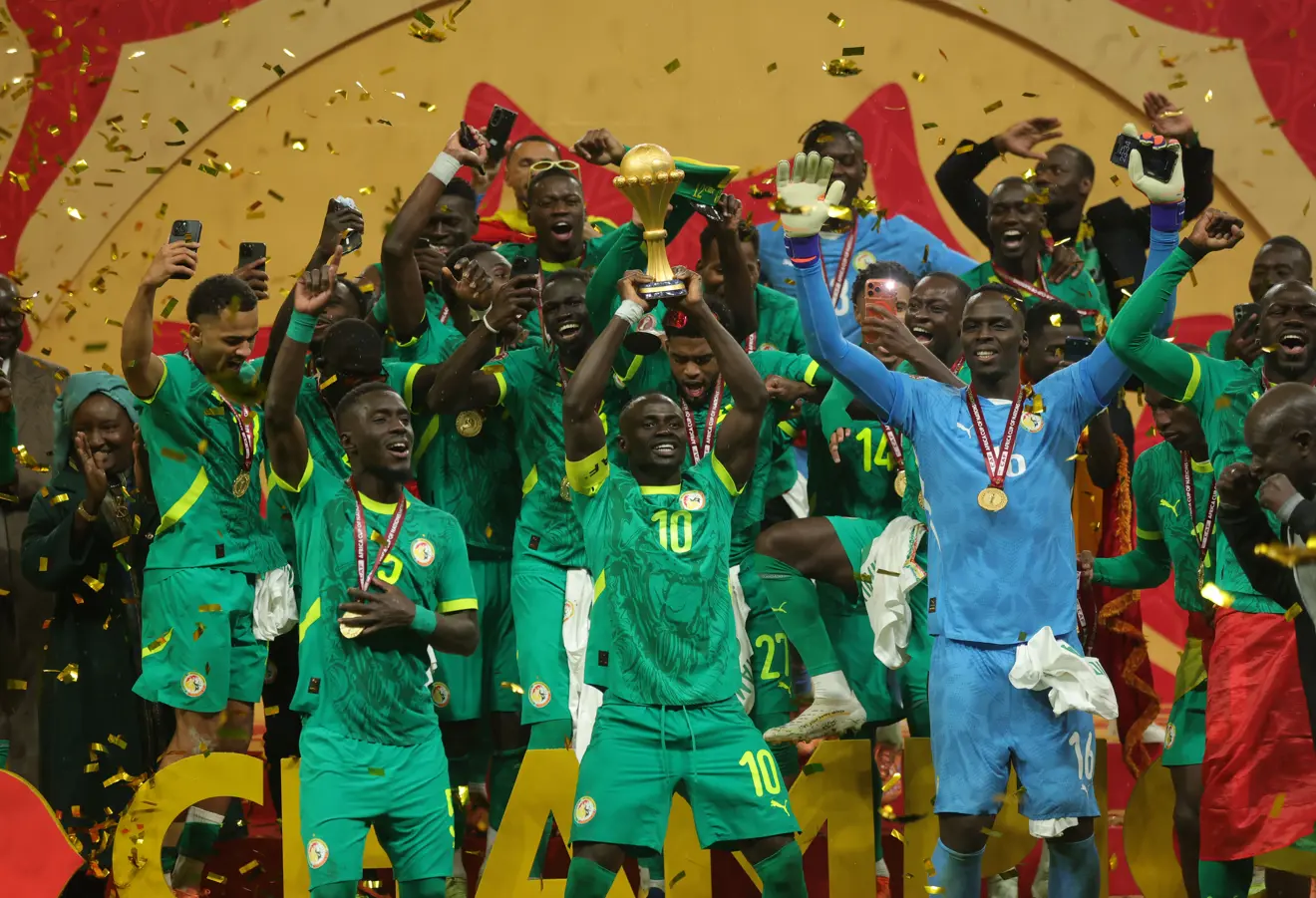
Senegal have won their appeal at the Court of Arbitration for Sport (Cas) over the result of the 2025 Africa Cup of Nations final.
Earlier this year, the Confederation of African Football (Caf) stripped Senegal of the title and awarded it to Morocco after the latter appealed. But Cas’ decision means Senegal have now been restored as the winners of the controversial final and remain African champions.
But why did Cas overrule Caf’s earlier decision?
It all rests on the matter of the authority of a match referee. Cas declared that, although Senegal left the pitch during the final, the referee’s decision to restart the game took precedence because the match official is the chief authority on a football pitch.
Senegal’s players left the pitch in protest at a penalty awarded to Morocco in second-half stoppage time. But the players returned after a 15-minute delay and the referee restarted the game. Brahim Diaz missed the resulting penalty and Senegal then secured victory through a goal in extra time.
Caf’s earlier claim was that Senegal had forfeited the match under Articles 82 and 84 of its Afcon regulations. The provisions state that a team which leaves the field before the end of a match without the referee’s permission can be declared the loser.
Cas, however, found that those provisions were intended for situations in which a team’s conduct caused the referee to abandon a match permanently. Ndala did not do so.
“By blowing his whistle to resume his match at the 109th minute the referee considered that the conditions for resuming the match had been met,” Matthieu Reeb, the Cas director-general, said.
“Both teams were on the pitch again and both expressed their willingness to resume. The Cas panel found that the referee’s decision fell solely within the scope of the rules of the game and was therefore within his sole authority.
“The Caf rules would have been applicable if the referee had blown the final whistle which would have resulted in Senegal’s forfeit loss, but this was not the case.”
All theirs. Senegal lift it high. 🇸🇳🏆
#TotalEnergiesAFCON2025 https://t.co/E8WzbAx0lh
— CAF (@CAF_Online) January 18, 2026
The panel also relied on the principle known as the field of play doctrine, which generally prevents sporting courts from reviewing decisions made by match officials during a game. It concluded that Ndala’s decision to restart play was covered by that principle.
Cas acknowledged the difficult circumstances in which the referee had to make his decision but rejected the suggestion that his judgment was arbitrary.
“The panel acknowledged that the referee had to make a decision in an atmosphere of extreme tension,” the court said. “However, these circumstances do not justify describing the decision as ‘arbitrary’. On the contrary, the referee’s judgment did not appear to have been affected by factors external to the game.”
Morocco’s football federation has rejected the ruling and said it intends to pursue further legal action. It said Cas failed to consider the position of the International Football Association Board and Fifa on players leaving the field without a referee’s permission.
The federation also raised concerns about an alleged conversation between one of the arbitrators, Ulrich Haas, and the president of the Senegalese football federation shortly before the verdict. Haas strongly denied having any direct contact with the parties involved in the case.
Caf has said it respects the Cas ruling and will take the necessary steps to implement it.