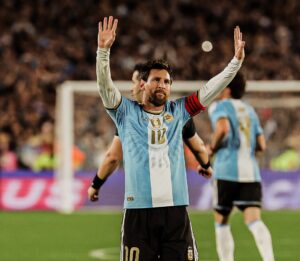

Lionel Messi has dazzled at the 2026 World Cup, but is that enough to win the Ballon d’Or? Here’s why the award may still belong elsewhere.
The 2026 FIFA World Cup has once again reminded the football world why Lionel Messi remains one of the greatest players ever to grace the game. With eight goals, four assists, and another inspirational tournament leading Argentina to the World Cup final, the 39-year-old has rolled back the years on the biggest stage.
Unsurprisingly, the Ballon d’Or debate has returned. But should the World Cup alone be enough to make him the favourite? The answer is far more complicated.
Lionel Messi leads the 2026 World Cup for:
🥇 Goal contributions (12)
🥇 Chances created (25)
🥇 Big chances created (8)
🥇 Successful dribbles (25)
🥇 Accurate crosses (19)
🥇 Through balls (15)
🥇 Shots (34) pic.twitter.com/0qAvoeHcXa— WhoScored (@WhoScored) July 16, 2026
The first question is simple: Is Lionel Messi the best player in the world right now?
Based on the entire 2025/26 season, probably not. Messi has unquestionably been the best player at this World Cup, but the Ballon d’Or is meant to reward performances across an entire season, not just one tournament, regardless of how prestigious it is.
There is no rule preventing a player outside Europe from winning the Ballon d’Or. The award is no longer restricted to Europe’s best player but is instead presented to the best footballer in the world over the course of the season. That means Messi’s performances for Inter Miami are eligible for consideration.
However, while he has continued to excel in Major League Soccer, he has not consistently been the standout performer in world football throughout the club season.
Several players have enjoyed outstanding campaigns in Europe’s biggest leagues and the UEFA Champions League. Those players have delivered week after week against elite opposition over nine or ten months before adding their own contributions at the World Cup.
Their consistency across the full season strengthens their Ballon d’Or credentials in a way that one exceptional tournament alone cannot fully replicate.
That does not diminish what Messi has achieved in North America. His World Cup performances have been extraordinary, and he has once again carried Argentina deep into the tournament.
If the award were simply for the best player at the World Cup, there would be very little debate. Messi would almost certainly deserve it. But the Ballon d’Or is intended to recognise sustained excellence across the entire football calendar.
Of course, football fans know that Ballon d’Or voting has rarely been free from controversy. Over the years, there have been winners whose triumphs sparked fierce debate, with many believing other candidates deserved the award.

Because of that history, it would not be shocking if Messi were to win another Ballon d’Or, especially given the emotional weight of another remarkable World Cup campaign and his status as one of football’s greatest icons.
Even so, based purely on footballing merit across the 2025/26 season, the strongest argument is that this Ballon d’Or belongs elsewhere.
Messi’s World Cup heroics undoubtedly place him among the leading contenders and should comfortably earn him a place in the top five of the final rankings. But being the best player at the World Cup is not necessarily the same as being the best player over an entire season.
Messi has once again reminded the world of his timeless brilliance and strengthened his legendary legacy. However, unless World Cup performances overwhelmingly outweigh everything that came before them, the 2026 Ballon d’Or should recognise the player who has been the most consistently outstanding from the opening weeks of the club season through to its conclusion.