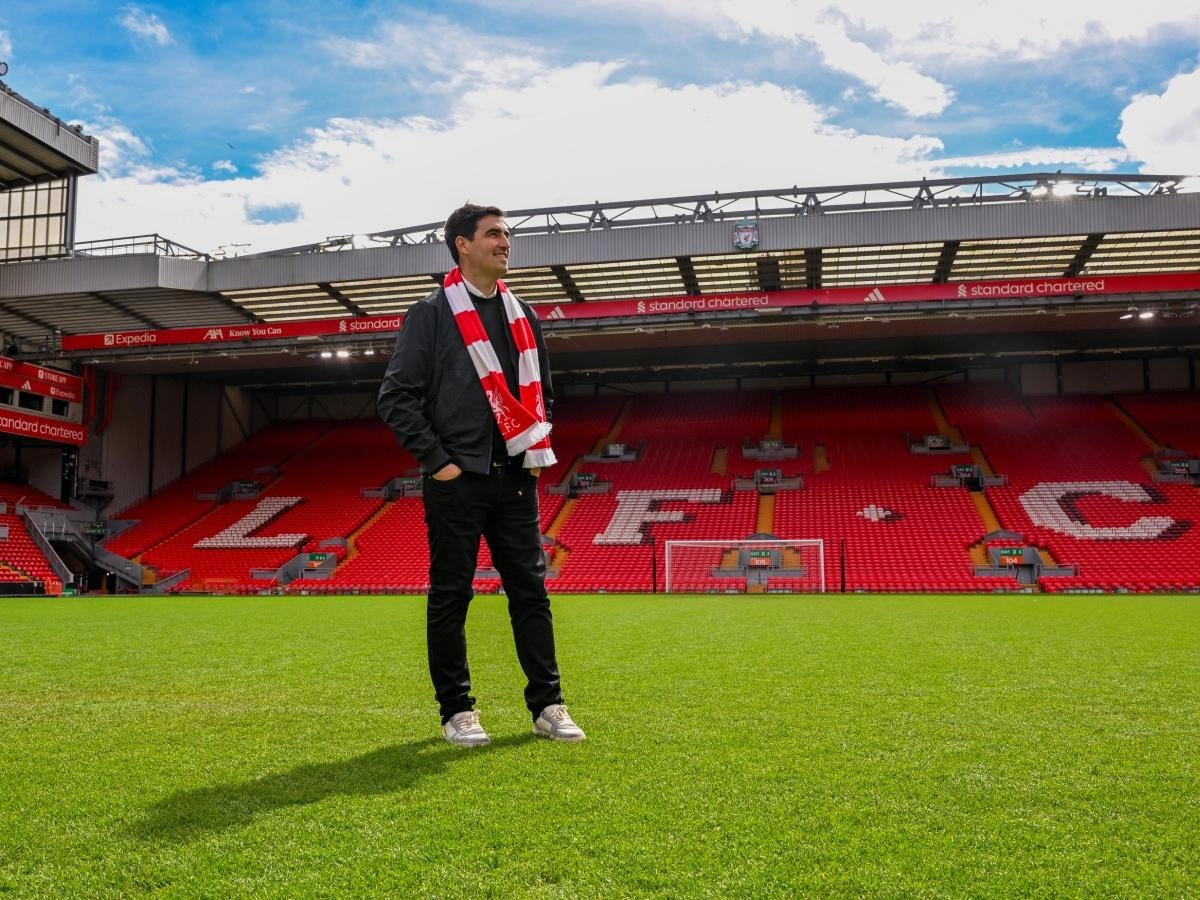
Liverpool have appointed Iraola, so we examine the major points the new coach must address
Liverpool have reached an agreement with Andoni Iraola to become the head coach next season. The Spaniard arrives facing the sizeable task of rebuilding the team after their limpest of title defences under Arne Slot.
The club spent heavily last summer to reshape the squad but results failed to match the scale of the investment. Slot’s initially positive tenure ended with hugely underwhelming results and his successor now has several pressing issues to solve before Liverpool can re-establish themselves among the Premier League’s dominant forces.
The first challenge to look at is the tactical side. Iraola has to define how Liverpool play. For much of last season, the team were porous in defence, possession was sterile and opponents were frequently able to expose weaknesses in transition. Liverpool were simply too open too often.
There was a disconnect between Slot and the fans at Anfield, who ultimately booed the team towards the end of the season. There was clearly also dissatisfaction within the squad. Notably, Mohamed Salah bemoaned the departure from the “heavy metal football” instituted by Jurgen Klopp and called for a return. His comments were clearly critical of Slot’s tactical style and his comments were liked by most of the squad.
Iraola has built a reputation for proactive, aggressive football with Bournemouth that would seem to fit more closely to Klopp’s German school of thought, and Liverpool supporters will expect to see those principles quickly reflected on the pitch.
The composition of the midfield will largely determine whether that happens. Liverpool possess enough technical quality with Ryan Gravenberch, Alexis Mac Allister, Dominik Szoboszlai and Florian Wirtz but they lack the physical presence required to control the centre of the pitch consistently.
Gravenberch was phenomenal in his first two seasons, especially in the 2024-25 season, but last term the Dutchman had a little too much to do with Mac Allister’s poor form and Szoboszlai being moved around too much to accommodate Wirtz. Iraola has to decide who plays in midfield and how each player fits into a coherent structure that can consistently break opposition play and protect the defence.
How Iraola works with Wirtz may be the defining element of his Liverpool tenure. The club invested heavily in the German but he struggled for physicality in his first season. The talent is there but it is doubtful that he can quickly develop that physical aspect next season. Iraola must find the right role for him and shape the midfield in such a way as to justify the investment and cover up his weaknesses.
Spectacular from Wirtz 🤩 pic.twitter.com/fAS7VKJRK5
— Liverpool FC (@LFC) April 25, 2026
In attack there is much work to be done. Liverpool were toothless up front for much of the season, regularly bailed out by Szoboszlai’s interventions in what was an excellent individual season for the Hungarian. The attacking rebuild has become even more important following Salah’s departure. Replacing a player of his stature is impossible enough but last season as his performances declined it was obvious that Liverpool had next to no wing play.
Federico Chiesa seems to have no future at the club and appears unlikely to stay. Cody Gakpo has never entirely convinced as a natural winger and the club will be needing a massive upgrade on him. Rio Ngumoha offered encouraging glimpses of his potential but the teenager is far too young to shoulder the responsibility of carrying Liverpool.
The club will need to recruit wingers, with Yan Diomande, RB Leipzig’s left winger, currently at the top of the list. He is unlikely to be enough, as the club also lack an option on the right wing. Jeremie Frimpong was played there often by Slot but it always appeared to be a puzzling decision and Iraola would need to do better.
In the centre, the new manager will work with Alexander Isak and Hugo Ekitike, which is as much quality as any manager could ask for, but he would need to devise a way for both of them to play together, as they are too good and too expensive for one of them to be a backup. Ideally, both players should be consistent starters, even if Isak struggled with injury problems last season and the club will be hoping those days are behind him.
Defence is a major area. Ibrahima Konate’s departure creates an immediate vacancy alongside Virgil van Dijk that would need filling. Jeremy Jacquet is set to arrive in the summer but it remains to be seen if he is ready to become a consistent starter at centre-back at the highest level in the Premier League. The same goes for Giovanni Leoni, who suffered an anterior cruciate injury on his debut for the club last season.
Iraola worked with Milos Kerkez at Bournemouth and will be reunited with the left-back this season, which bodes well for the club on that side of the pitch, but effective signings will still be needed at least in centre-back and right-back.
The scale of Iraola’s task is huge, but the Spaniard knew that before he agreed a deal to walk into one of the biggest clubs in the league. How he plays his cards over the next 12 months will go a long way towards shaping his tenure.