Club have many financing options and viable plans to keep costs under control, says project chief
Manchester United have a lot of funding options available to fund their new stadium and will not rely only on borrowing.
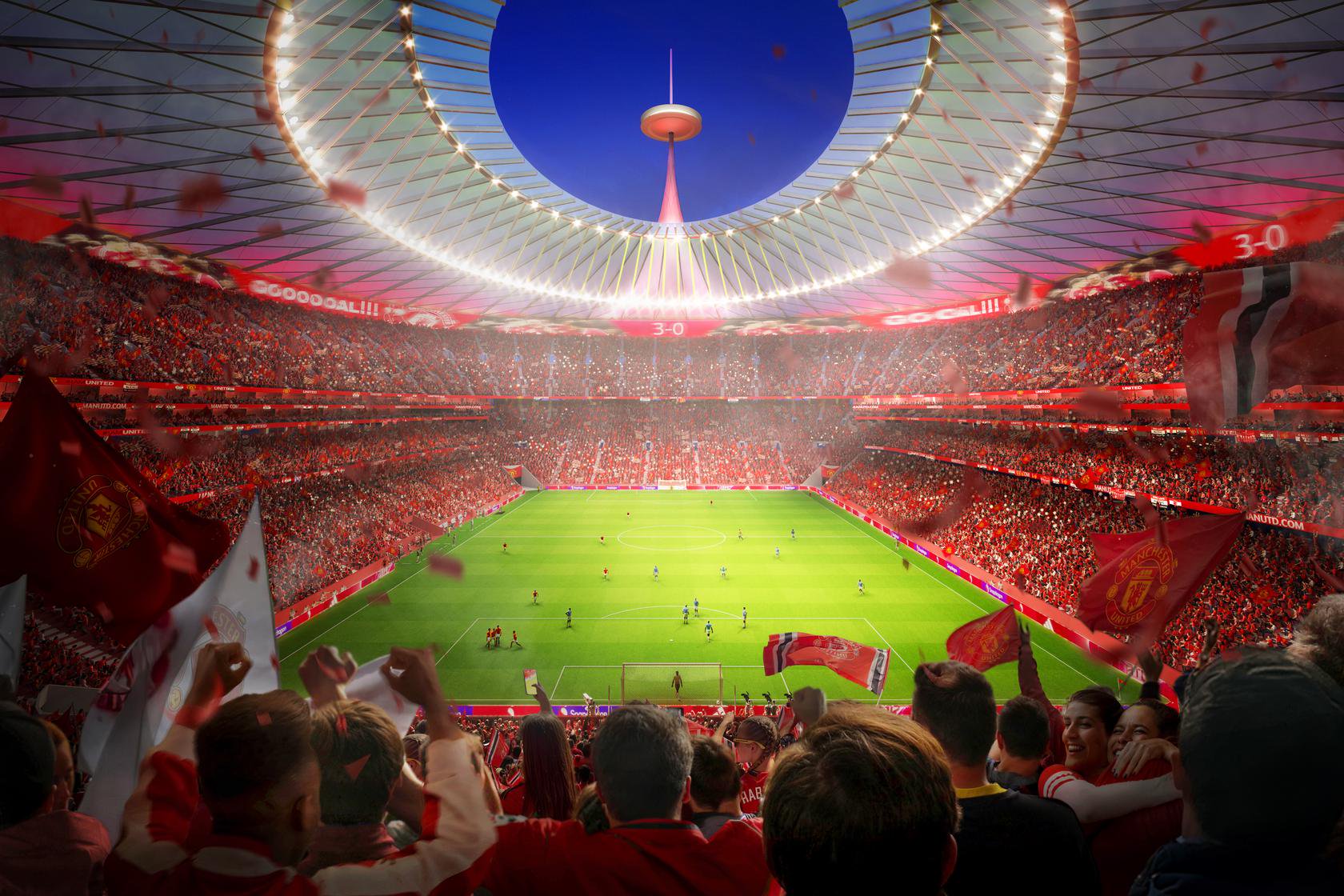
The club unveiled plans for the 100,000-seat stadium on Thursday and confirmed it would be built about 350 metres north-west of Old Trafford. United have previously estimated the development will cost around £2bn. The club already carries debt of about £1.3bn.
Collette Roche, the chief executive of the stadium project, said the final cost is still not clear because of the scale of the development.
“That is the $2bn question,” Roche said. “We can look at what other stadiums cost but we’re going to be building a very different stadium, bigger than any other: 100,000 seats. So there is not a price I can go to.
“We’ve still got all funding options available: we can have debt, equity, shares, other investors. We’ve had a lot of approaches. People saying: ‘Can I be part of this?’”
Roche said United were determined to avoid the kind of spiralling costs that have affected other major infrastructure projects.
“This needs to be a sanity project, not a vanity project,” said Roche. “You’ve seen from the way we now run the club, having control of our costs is really important. You’ve seen where we are financially, which we are improving. It will be on us to deliver to the time and budget.”
United have been following a cost-cutting programme introduced since Sir Jim Ratcliffe became a minority owner two years ago. They have cut down around 450 jobs, reduced player wages and even walked away from high transfer fees. They have all helped to improve their financial position but many supporters will rightly wonder whether funding such a stadium would not simply represent a case of one step forward, two steps back.
“I know things can go out of control,” Roche said. “People said that with me on Carrington: ‘You’re never going to do it [refurbish the training centre] in that time, for that price [£50m].’ We did because we were disciplined.”
One thing United are considering is selling naming rights to the new stadium. This, according to Roche, would create an additional income stream to reduce the financial burden on match-going supporters.
“I really don’t know what the stadium will be called,” Roche said. “What I will say is we are going to potentially sell the naming rights to the stadium. Everybody realises affordable accessible ticket prices are really important. To do that, we need to generate revenue streams in other places as well to build the stadium that everyone said is going to be really expensive.”
Roche explained that borrowing, if used, would be supported by future revenue generated by the larger venue.
“We’ve got a lot of fans who want to watch the match and can’t, so we need a bigger stadium,” Roche said. “In terms of how we then fund it [and any] debt, it’s not about putting debt on the club, if indeed that is the route we go. We’ve got other funding options.
“In and around the matches, people stay for longer. We’ll have all the facilities, other experiences. That’s going to generate a lot more revenue. That’ll go back into the club, the team, growing our football.
“Whilst we can get over-obsessed with debt and borrowing, there is no stadium where you would not have some form of borrowing. I am sure all of you haven’t paid for your houses out of your own pocket. We need to make sure it’s sensible and generates income for the future of the club.”