World Football governing body’s U-turn on Balogun red card has been criticised by the European body
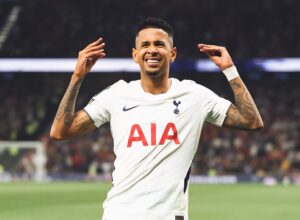
On Monday, Uefa hit out at Fifa, accusing them of undermining the integrity of the World Cup after the governing body suspended the automatic ban handed to USA striker Folarin Balogun and cleared him to face Belgium in Monday’s last-16 tie.
Balogun was shown a straight red card for a challenge on Bosnia and Herzegovina defender Tarik Muharemovic during USA’s 2-0 victory. Fifa said on Sunday that the mandatory one-match suspension would instead be suspended for a year under a provision in its disciplinary code that allows sanctions to be suspended.
The decision prompted a challenge from Uefa, which said Fifa had ignored a basic principle of the game.
“We express our disbelief at such an unprecedented, incomprehensible and unjustifiable decision,” Uefa said in a statement. “Yesterday’s decision to suspend for a probationary period of a year the implementation of the one-match automatic suspension following the red card issued to the player Folarin Balogun crossed a red line.”
Uefa insisted that an automatic suspension following a red card is not open to interpretation and warned Fifa that making an exception during the tournament could damage confidence in the competition.
“Football, like any other sports, relies on rules, which are the basis for fair, honest and transparent competition,” the statement said.
“Sometimes rules are open to interpretation. In this case not. A minimum automatic suspension of one match following a red card is not a discretionary option and does not require the decision of a competent body to be enacted.
“It is a principle embedded in regulations, which cannot be made subject to exceptions, let alone in the middle of a tournament where several other players have been in the same situation and regularly served their suspension.
“When the certainty of rules is no longer guaranteed by its guardians, the integrity of the game is at stake and the credibility of a competition is undermined.
“Equally, such decision creates a precedent in the ongoing tournament, where similar situations will now require an equal treatment, to the detriment of the competition.”
Bringing the passion, energy and excitement 😍
It’s all in a day’s work for @FIFAWorldCup 2026 mascots Maple, Zayu and Clutch. pic.twitter.com/GX8XWqTnBN
— FIFA (@FIFAcom) July 4, 2026
But what happens when football’s two giant bodies go at each other?
Frankly, Fifa did have it coming and it was more than right that a top body like Uefa called them out, adding weight to earlier statements made by national team coaches and federations.
What makes Fifa’s conduct even worse is reports that US President Donald Trump personally urged Fifa president Gianni Infantino to review Balogun’s dismissal, making three calls to the governing body from Wednesday. Trump later thanked Fifa on his Truth Social platform, saying it had “done what was right and reversed a great injustice”.
It is difficult to predict what the future implication of these might be for football itself as a sport, but Fifa, like Trump, have been far too autocratic and needed reminding that football is much bigger than them as an organisation.