When Arsenal switched into ultra-defensive mode, the Spaniard’s futuristic football machine had to dig deep for victory
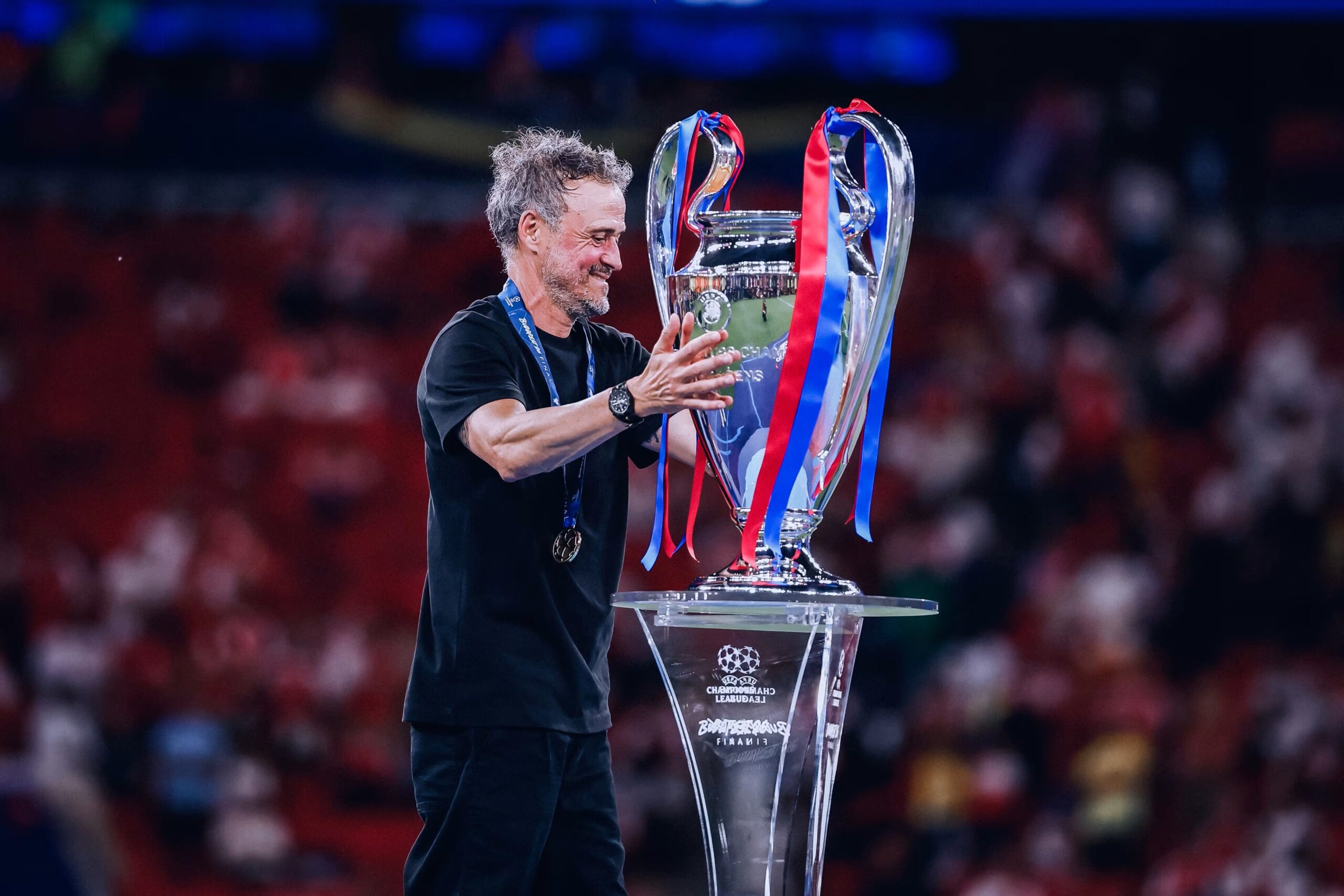
The second can be harder to win than the first, and when Paris Saint-Germain lifted the Champions League trophy here there was a sense of the ultimate accomplishment, victory delayed, defied, defended against with 11 men behind the ball, but ultimately never denied.
Luis Enrique’s side first tasted glory after a 5-0 demolition of Inter Milan in Munich, but here in Budapest premium-ball gave way to a gruelling spectacle, a siege against haram-ball, football as pain.
Arsenal were always going to crank up their ultra-defensive mode with only one game between them and eternal glory. Kai Havertz’s sixth-minute goal only made it easier and more justifiable. Take Mikel Arteta’s team and place them in a contest where they don’t need to score, only stop the other guys from playing, 90 minutes of defensive non-football. It was the dream scenario.
This was difficult ground for PSG. They are used to playing teams who defend with a low block the entire game, but this was the king of low blocks, the ultimate boss in a fighting game, the footballing version of Shao Kahn. The usual dreamy alien-ball was lacking from Enrique’s men from the start, PSG uncharacteristically slow and unimaginative in their passing.
A match that advertised an unstoppable force meeting an immovable object was always likely to lead to an impasse, a 120-minute chess match, two men locked in an eternal arm grip.
Enrique has a serious argument for being the best coach in the world. He has built a team with seemingly the perfect way to play, a futuristic football machine, a flawless simulation on a supercomputer. Here he stood on the sidelines watching the football match trying to happen, like an anxious salesman in a t-shirt waiting for a delayed bus.
“Legend? I’m not interested in that,” he said after the game. “I have only three [Champions League trophies], so I have to improve, but I will sign up for four.”
But you are a legend now, Luis. Before Cristhian Mosquera lost his head to scythe down Khvicha Kvaratskhelia in the box and give Ousmane Dembele a chance to level from the spot, there was always the strong possibility that Arsenal could spring forward on the counter as PSG tried to apply pressure, finding a second goal that would surely the end the contest.
The Parisians had to keep a watchful eye on their own goal but also try to break down the hardest defence in Europe this season. It needed them to reach deep inside and summon something more than attacking brilliance, to keep their heads, keep passing, keep searching for those little pockets of space. At times watching this was like spending two hours watching an 80-year-old man try to thread a needle.
But Arsenal are also really good at this. Defending is a discipline. More than just 11 men behind a ball it requires marking down key men, running and choking spaces, blocking out passing lanes. In the first half Kvaratskhelia was always double-teamed by Bukayo Saka and Mosquera, Arteta’s clever response to Enrique’s idea of having his side isolate the Georgian and his full-back.
Perhaps as a consequence, PSG showed a heavy right-wing bias in the first half. Usually they thrive on constant rotation but here Desire Doue was stuck on the right wing, trying to find combinations with Achraf Hakimi, Joao Neves, Vitinha and Dembele. Arsenal were up to the task, Piero Hincapie having a really nice game.
But Mosquera’s rush of blood to the head led to the penalty and PSG could breathe after an hour. As regulation time ran out, both teams were exhausted. The substitutes came on and the quality of play dropped. Arsenal were perhaps slightly guilty of a lack of extra ambition here, unwilling to push too hard for it after most of PSG’s best players had left the pitch.
Dembele, Kvaratskhelia and Marquinhos were all off. But then again, defending is an utterly draining task. Viktor Gyokeres was on for Arsenal, and his late effort was deflected narrowly wide before it reached penalties. Eberechi Eze missed but was granted reprieve when David Raya also denied Nuno Mendes, before Gabriel Magalhaes skied his penalty and Enrique’s side could celebrate.