Manchester City manager has undoubtedly achieved incredible things, but will always remain in the shadow of Ferguson
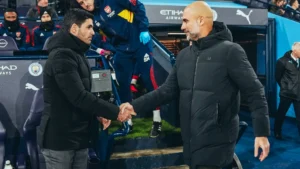
So, Pep Guardiola reached 1,000 games as a manager with Manchester City’s 3-0 victory over Liverpool. One man who sent him a special congratulatory message before that game was Sir Alex Ferguson himself, who achieved the feat in the 1990s before ending with an astonishing 2,155, the most of any manager ever.
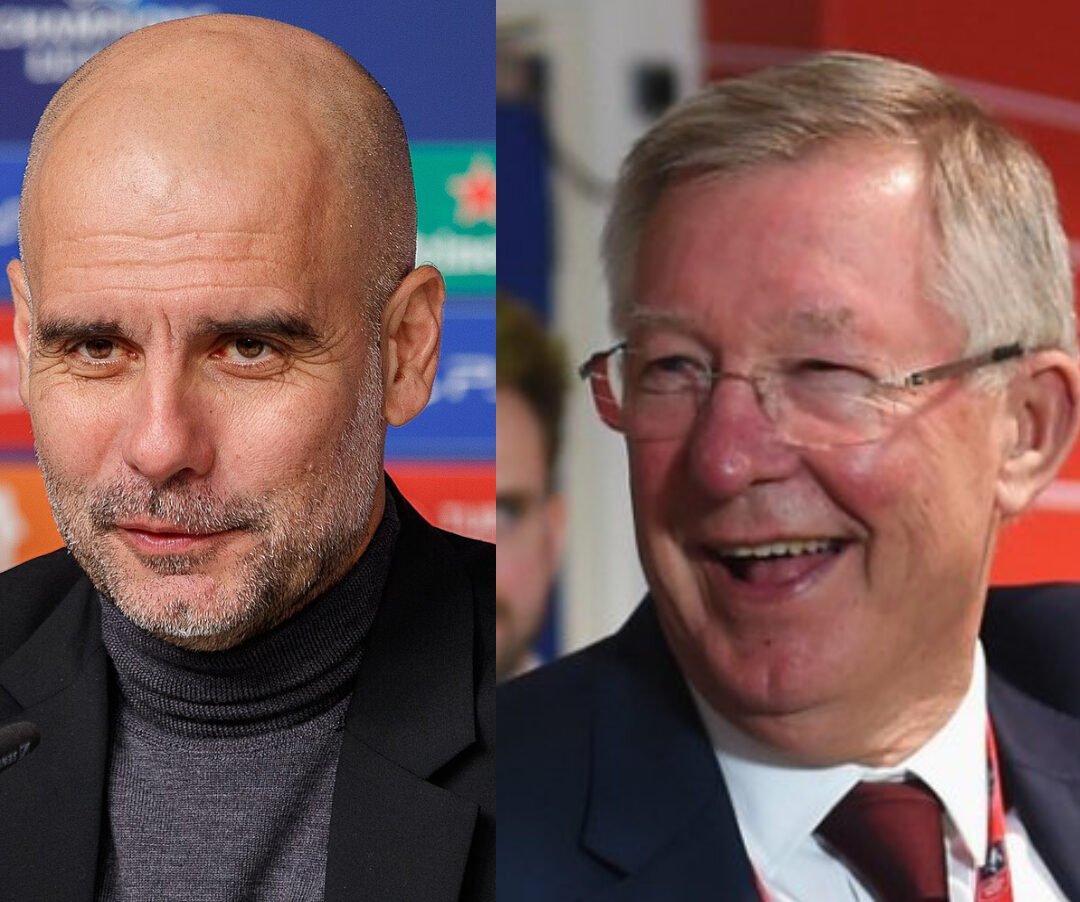
It does the beg the question: has Guardiola surpassed Ferguson, and if not, can he ever?
Ferguson won 48 major trophies in his career as a manager. At the moment, Guardiola’s major trophy count stands at 39. But even if he manages to surpass this number before ending his managerial career, he can never surpass Ferguson’s legacy.
Here’s why. Ferguson proved that he can raise an average, struggling club to exceptional heights. Besides his accomplishments at Manchester United, Ferguson’s achievements at Aberdeen in the late 1970s and early 1980s were also excellent and historical.
He joined a club that had only won the Scottish league once 23 years before. Rangers and Celtic were the dominant sides of the period. Ferguson won the league in his second season to break the duopoly. In his fifth season he achieved the unimaginable when his Aberdeen side defeated Bayern Munich and then Real Madrid in the final to win the European Cup Winners’ Cup in 1983.
It was the club’s first European trophy. Ferguson then proceeded to win the European Super Cup by beating Hamburger SV, winners of the Bundesliga and the European Cup. He would also win a couple more league titles with the club.
Also, when Ferguson joined United they hadn’t won the league in 19 years and had only been promoted back to the First Division 11 years before, having been relegated the previous season. It was from that state that he lifted United to the status of heavyweights of the English game, overpowering the then leading teams Liverpool, Arsenal and Everton.
As for Pep Guardiola, while he has undoubtedly achieved incredible things, he started out at Barcelona, a club that had won La Liga twice in the previous four years, before joining Bayern Munich, a club that had also won the Bundesliga twice in the previous four years and were the defending champions. At Manchester City, he joined the club after the Qatari takeover, when they were boosted by financial doping and had won the league twice in the previous six seasons.
To make clear, the Spaniard’s achievements are unassailable. After all, many managers fail at top clubs and Guardiola’s feats, particularly at Barcelona and Manchester City, surpassed anything the club owners could ever have envisaged in their wildest dreams when they appointed him.
Still, his accomplishments will always remain in the shadow of Ferguson’s at Aberdeen and United.
To add to that, in Ferguson’s time a manager was a manager. Just like Arsene Wenger did, Ferguson had near-complete control of his club’s entire footballing structure. Manchester United did not have a director of football. Ferguson handled contracts, youth development and transfers, meaning that a lot of the managerial genius rested on him.
He shaped the club’s identity and culture entirely around his philosophy. The footballing behemoth that Manchester United became in the Premier League era was in large part thanks to this one man.
Ferguson leveraged this role to spot talent and bring them to the club, or develop them from the youth system. The Class of 92 are some of United’s most famous achievers and were homegrown. They are also nicknamed Fergie’s Fledglings, mimicking the earlier generations of Busby Boys, who were also developed in the club’s youth system by Sir Matt Busby and went ahead to accumulate success and fame.
A famous example of Ferguson spotting and recruiting talent is the impressive story of how he encountered Cristiano Ronaldo in a friendly game against United and immediately insisted he wanted him in the first team, rather than loaned back to Sporting as other interested parties had in mind.
In Pep’s time, in the modern era, clubs have much more diversified structures that have chipped away at the manager’s remit, letting (or pushing) him focus on the squad.
Guardiola has given effusive praise to Txiki Begiristain, City’s director of football, who has led much of the footballing strategy and identified players suitable to the club’s system and how Guardiola wants to play. A good number of the talented players brought into the club were not signed by Guardiola, but by the “Txiki” that the Spaniard has affectionately credited in press conferences.
Without a doubt, he will always be regarded as one of the greatest managers of all time. But also, always a level below Ferguson.