
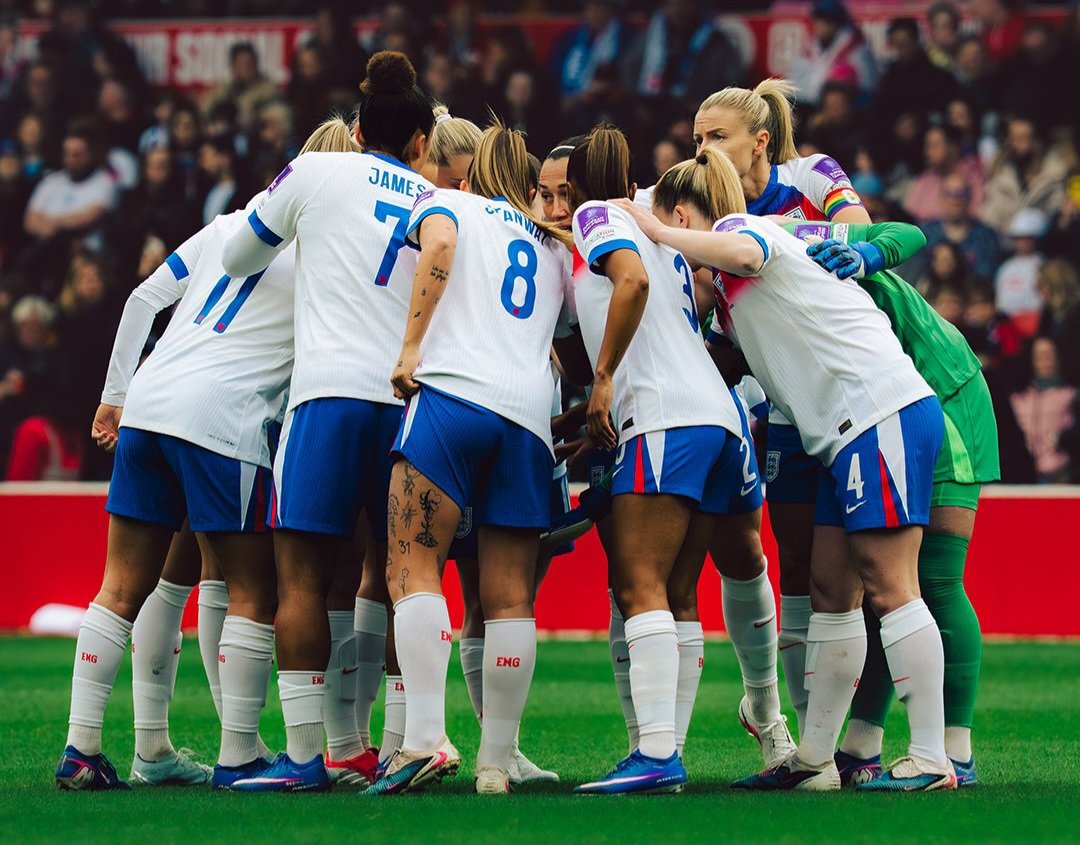
This International Women’s Day, we explore how the England Lionesses healed a nation’s sporting trauma and revolutionized school sports.
Before Sarina Wiegman became head coach of the Lionesses, the English national setup, both men’s and women’s, often seemed paralyzed by the fear of failure when the lights got brightest.
Wiegman introduced a steely, methodical Dutch approach that transformed the team from a group that hoped to win into a machine that expected to win.
This shift in DNA was visible in the way they navigated the Euro 2022 final; there was no panic, only an inevitable march toward history that the men’s side had struggled to find for half a century.
#OnThisDay in 2022, the #Lionesses beat world champions USA 2-1 in front of a sold-out Wembley crowd 🫡 pic.twitter.com/ykDg1rpB3R
— Lionesses (@Lionesses) October 7, 2025
That victory at Wembley acted as a massive cultural reset, particularly for the younger generation. For the first time, English Football wasn’t defined by the historical baggage of the men’s game, but by the joy and defiance of the women’s.
When Chloe Kelly wheeled away in celebration, she wasn’t just celebrating a goal; she was providing a new North Star for millions of girls across the country. It was a moment of pure, unadulterated success that felt fresh, inclusive, and entirely untainted by the hurt of the past.
“We said we wanted to create a legacy, and we have. We want girls to be able to play football in schools, and we want them to have the same opportunities as the boys.” — Leah Williamson
The legacy of that win moved quickly from the pitch to the halls of Parliament. The Lionesses famously used their platform to pen an open letter to the government, demanding that all girls be granted access to at least two hours of PE per week.
By 2026, we can see the fruits of that labor; football is no longer “a boy’s game” in the playground. The Lionesses didn’t just win a trophy; they forced a systemic change that ensured the next generation of female athletes wouldn’t have to fight for a patch of grass.
Then there is the Lioness Effect on the stadium culture itself.
Not long ago, a women’s international match was a niche event held at smaller regional grounds. Today, selling out the 90,000-capacity Wembley Stadium has become the new normal rather than a one-off anomaly.
The atmosphere at a Lionesses game is distinct, celebratory, family-oriented, and remarkably free of the toxic tribalism that can sometimes mar the men’s game. They have created a safe, aspirational space for fans of all ages to fall in love with football all over again.
Back-to-back European champions. History repeatably made.
Four years of Sarina Wiegman ✨ pic.twitter.com/uFUd7Pxcrb
— Lionesses (@Lionesses) September 1, 2025
The commercial rise of the team has been equally staggering. From Mary Earps forcing a global giant like Nike to rethink their goalkeeper jersey production to the record-breaking viewership numbers, the Lionesses have proven that women’s football is a powerhouse in its own right.
They are no longer a support act; they are the headline.
This International Women’s Day, we recognize that their success has provided a blueprint for how a sports team can lead social change while maintaining elite-level performance.