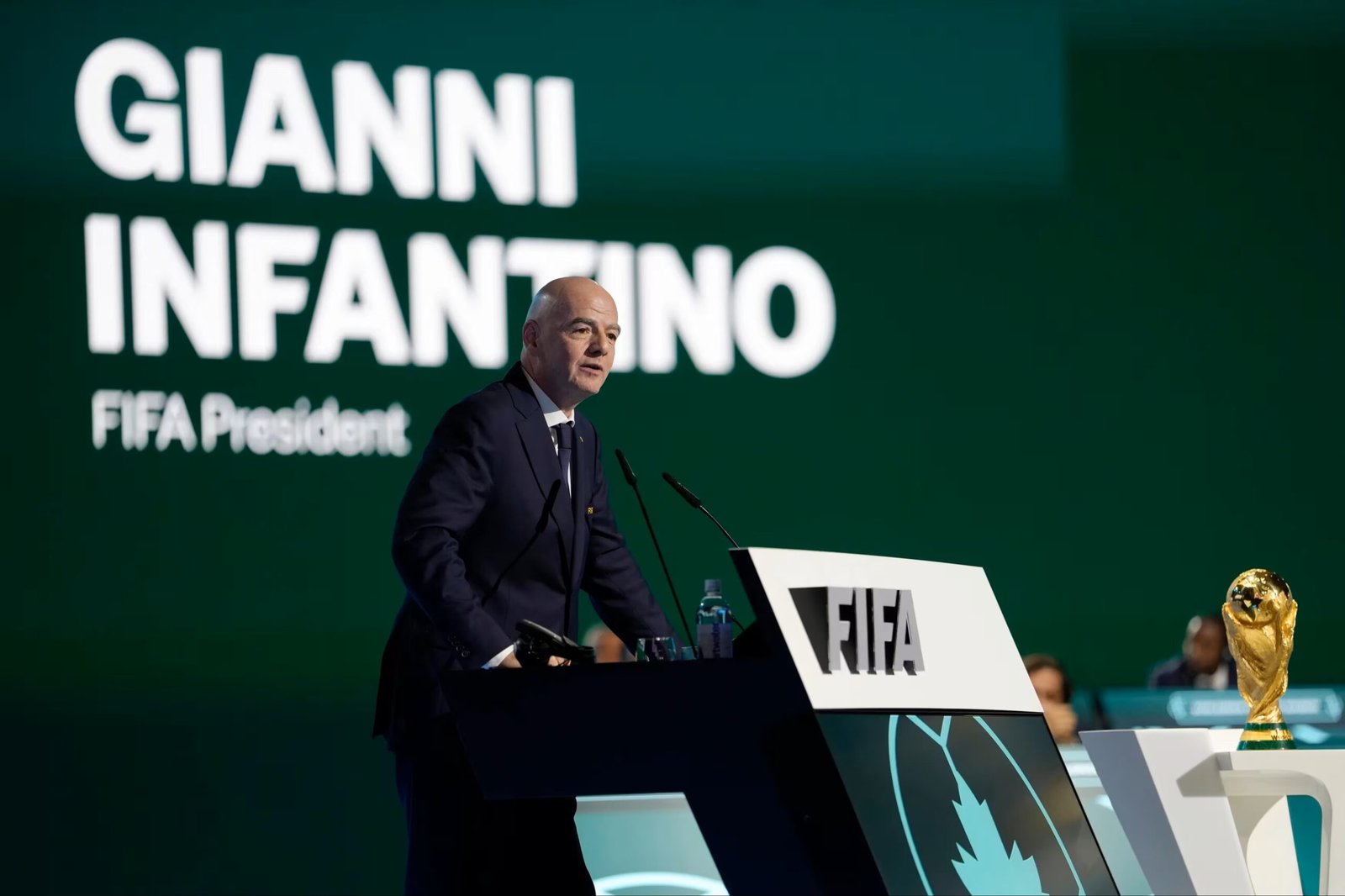
FIFA president Gianni Infantino has announced a plan to sell stakes in the World Cup and upcoming tournaments and fans feel like the soul of the game is gone.
For decades, the FIFA World Cup has been treated as football’s crown jewel. It is more than just a tournament, it’s a cultural event that belongs to fans across every continent. That is why Gianni Infantino’s latest proposal has sparked one of the biggest governance debates football has seen in years.
The FIFA president has unveiled plans to create a new commercial subsidiary called FIFA Forward Enterprise (FFE), a company that would manage the commercial and event operations of the World Cup and other FIFA competitions.
EXCLUSIVE: Fifa’s president Gianni Infantino is planning to sell stakes in the World Cup to private investors under a scheme that could potentially earn him tens of millions of pounds.
Investor discussions held with figures close to the Trump administration, say sources.…— Martyn Ziegler (@martynziegler) July 28, 2026
The idea is to raise billions of dollars by selling a minority stake in that company to carefully selected private investors while FIFA retains overall control of football matters.
Infantino argues that this is not about selling football but unlocking its commercial value. FIFA says the governing body would continue to control every sporting decision, including tournament formats, qualification systems, regulations and the international calendar. According to FIFA, investors would only have a financial interest in the commercial success of the business, not the power to influence how the game itself is run.
Under the proposal, FIFA Forward Enterprise would be valued at around $20 billion, with up to 20% made available to outside investors, raising approximately $4.2 billion. That money would then be reinvested into football development around the world through expanded FIFA Forward funding and a new FIFA Fast Forward Programme, potentially giving each of FIFA’s 211 member associations access to significantly more funding over the next decade.
Member associations have been given a 53-day window to decide whether to support the proposal.
🚨 𝗕𝗥𝗘𝗔𝗞𝗜𝗡𝗚: Gianni Infantino is telling countries to sign up to World Cup sell-off in 53 days.
If they do, they will receive $40m each. If they reject it, they will receive $10m.
— @martynziegler pic.twitter.com/rQMkpjP2hK
— The Touchline | 𝐓 (@TouchlineX) July 29, 2026
On paper, the proposal promises new stadiums, better infrastructure, stronger grassroots programs and greater financial support for smaller football nations. For many federations that struggle financially, it is an attractive offer.
UEFA, Sepp Blatter and Europe’s Football Leaders Push Back
The reaction from Europe’s football establishment has been swift, and overwhelmingly negative.
UEFA has accused FIFA of crossing a line by opening the door for private investors to profit directly from the World Cup. European football’s governing body says the proposal threatens the integrity of the sport and has reportedly called an emergency meeting with its 55 member associations to coordinate a response.
The close relationship between the FIFA President and the US President has reached a financial dimension that is deeply damaging football. No one has the right to sell our game. #GianniInfantino #DonaldTrump #FIFA #UEFA #USA #Sellout
— Joseph S Blatter (@SeppBlatter) July 28, 2026
The criticism has not stopped there. The European Leagues organization has also voiced concerns over transparency, governance and the lack of consultation before FIFA unveiled such a significant proposal.
Several national associations across Europe say they first learned about the plan through media reports rather than official discussions, raising fresh questions about how the project has been handled.
Former FIFA president Sepp Blatter has delivered perhaps the strongest criticism of all. He argued that the World Cup is a cultural asset rather than a commercial product to be packaged for investors. In his view, football belongs to supporters and communities, not shareholders looking for returns. Blatter warned that FIFA risks losing the soul of the World Cup by treating it as an investment vehicle.
Among supporters, the proposal has triggered uncomfortable comparisons with the failed European Super League. While the two ideas are structurally very different, many fans see a similar theme: football becoming increasingly driven by investors and commercial interests rather than sporting values.
🚨 BREAKING: The EFC calls for more “rigorous and transparent governance processes”, adding it is “wholly appropriate” they are consulted on FIFA Forward Enterprise plans.
“European Football Clubs (EFC) notes with serious concern the sudden, unilateral media briefings and… pic.twitter.com/2eZiVbq9fg
— Ben Jacobs (@JacobsBen) July 29, 2026
Across social media, concerns have centered less on today’s proposal and more on what it could eventually become if financial priorities begin to outweigh football decisions.
How Could This Change Football?
FIFA has repeatedly stressed one important point: investors would not control football. The governing body insists it would retain exclusive authority over tournament formats, competition rules, governance, sporting regulations and the international match calendar.
That reassurance sounds convincing today. But history suggests that major investors rarely remain passive forever.
When billions of dollars are invested into a business, expectations naturally follow. Investors typically want stronger revenues, larger audiences and better returns on their investment. Even without direct voting power over sporting matters, sustained commercial pressure could eventually influence decision-making.
Football has already seen the World Cup expand from 32 teams to 48. Before that debate settled, there were already discussions about staging the tournament every two years. Those ideas were controversial because of their impact on domestic football and player welfare.
If private investors eventually seek faster revenue growth, proposals like further expansion, more FIFA competitions or even a more frequent World Cup could easily return to the table.
The consequences would stretch far beyond FIFA itself. Domestic leagues would face even greater scheduling challenges. International calendars would become more crowded. Clubs would lose players for longer periods, while footballers would be asked to play even more matches in an already demanding calendar. Fans could also begin experiencing tournament fatigue, where increasing the number of elite events gradually reduces their uniqueness.
None of this is guaranteed to happen. FIFA may genuinely maintain full independence over every sporting decision. But governance is rarely tested when everyone agrees, it is tested when commercial interests and sporting interests begin to conflict.
That is why this debate matters far beyond the financial details. It is really about who football ultimately serves.
The strong statements from UEFA, CONCACAF and other confederations suggest there are still influential voices prepared to defend what they see as the soul of the game. But whether they can successfully resist FIFA remains the biggest question.
With member associations now working within FIFA’s 56-day consultation period before a decision is made, this battle is only just beginning, and by the time that deadline arrives, football may be facing one of the most significant turning points in its modern history.