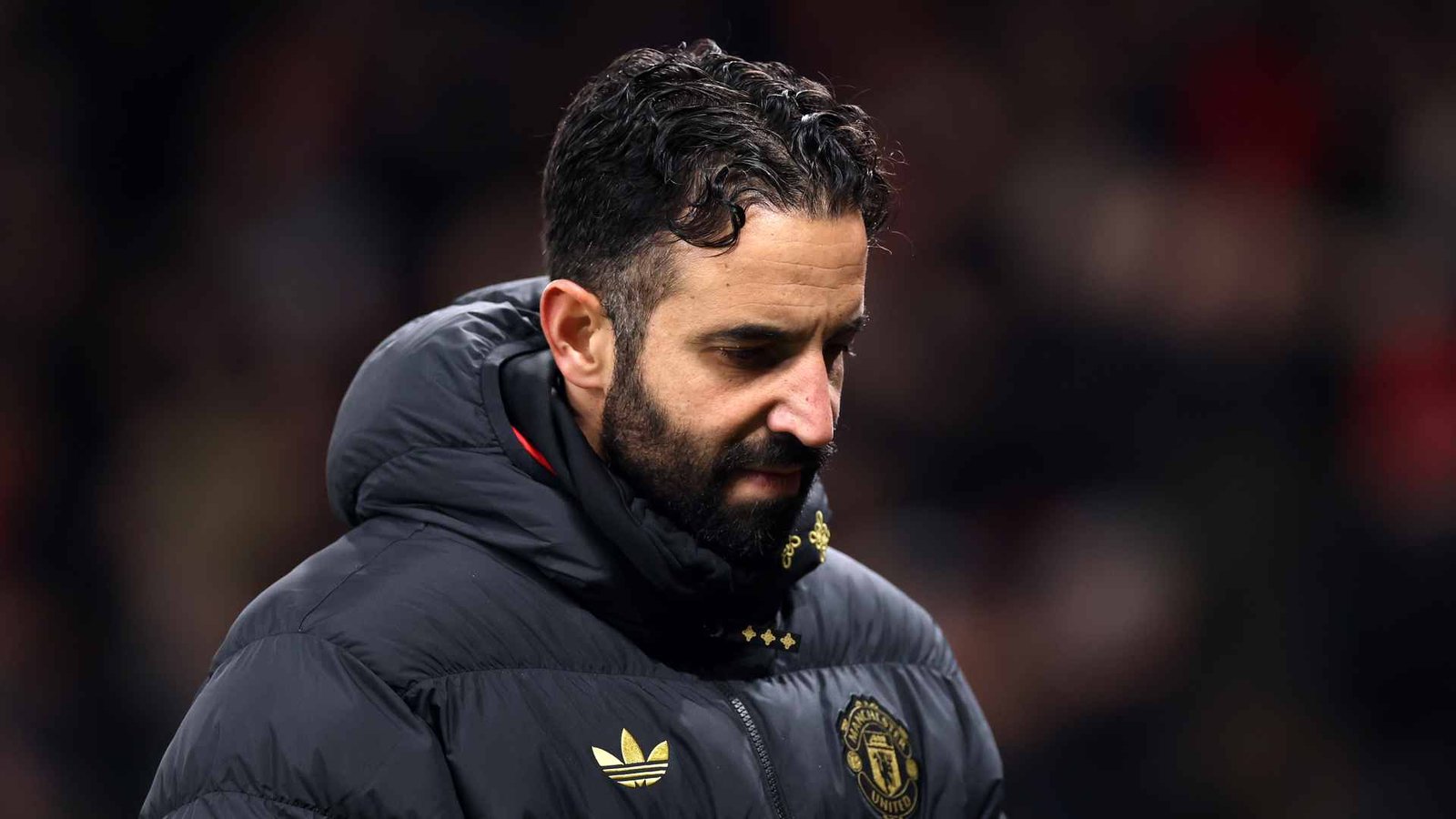
Manchester United chief executive Omar Berrada was at the FTWeekend Festival in New York last week, an annual event hosted by the Financial Times where bigwigs from different sectors engage in lively debates.
There the CEO spoke on Ruben Amorim and why the club sacked a manager for playing the 3-4-3 formation, when they had brought him in and backed him knowing he played the 3-4-3 formation.
Berrada notably credited Amorim with improving standards behind the scenes and helping lay the foundations for United’s return to the Champions League under Michael Carrick.
“Ruben, I think has done many good things that contribute to the success we’ve had this season just past,” Berrada said. “He helped raise the standard in the dressing room. He participated in the recruitment of the four players that we signed over the summer that had a very positive impact on the performance of the team.
“I think maybe where he got stuck is the size of the club. The scrutiny of your ideas and decisions is so constant that perhaps he struggled managing that. Not that it was too big for him, but he maybe cornered himself in a position where he wanted to stick in a very rigid manner to his ideas because he wanted to show everybody that it’s going to work.
“And in the context of the volatility of emotions you get by being part of Manchester United, when you lose two or three games in a row, then it’s the end of the world. So I think that was very hard to manage.”
Berrada also suggested the timing of Amorim’s arrival worked against him. The coach took over midway through a season before attempting to implement his methods fully during the following summer.
“You have to remember he came in mid-season,” Berrada said. “He didn’t have a pre-season. He didn’t have time to implement his ideas.
“Then by the time he got to the second season, he did have time to implement his ideas over the summer and we actually saw a really good start, we played really well in multiple games, but the weight of the previous season was still there.
“He perhaps wasn’t able to move on at the right time, so we felt had to make a change.”
On appointing him in the first place, Berrada said: “I think the rationale for choosing him was sound. He was a coach that had been very successful in Portugal, Sporting Lisbon.
“He was young, he was dynamic. He had a way of explaining his football knowledge and ideas that was very clear. We felt he was able to relate and communicate with the players and dressing room.
“Off the back of lots of changes of coaches in the last 10 years, we really wanted to give Ruben time to develop his ideas, his concepts and give him the freedom on the training pitch to be able to implement his ideas.”