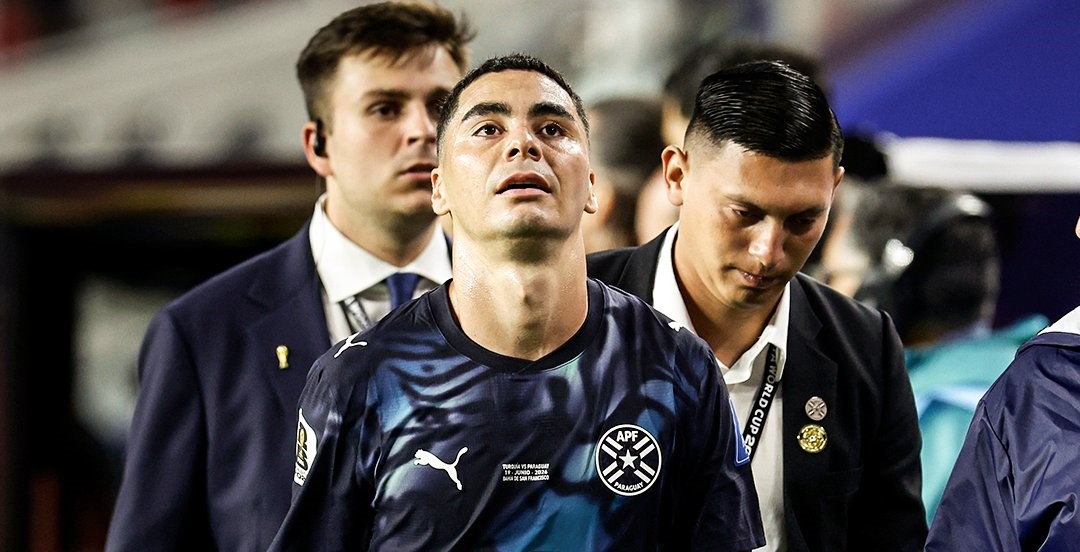
Miguel Almiron became the first player sent off under FIFA’s new mouth-covering rule at the 2026 World Cup. Here’s why the Paraguay star was shown a red card against Turkey.
Miguel Almiron made an unwanted piece of World Cup history during Paraguay’s crucial Group D clash against Turkey after becoming the first player to be sent off under FIFA’s controversial new mouth-covering regulation.
The incident occurred late in the first half of Paraguay’s dramatic 1-0 victory over Turkey. Tensions were already running high after a foul on Paraguay striker Isidro Pitta sparked a heated confrontation between players from both sides.
Miguel Almiron is handed a straight red for covering his mouth, the first adoption of the new rule at this World Cup.
Paraguay are down to 10 for the rest of this match against Turkiye. pic.twitter.com/2o8x41Y1n7
— ESPN FC (@ESPNFC) June 20, 2026
Amid the chaos, Almiron was seen covering his mouth while speaking directly to Turkey defender Mert Muldur.
Referee Ivan Barton of El Salvador initially allowed play to continue, appearing to miss the exchange. However, after being alerted by the Video Assistant Referee (VAR), the official reviewed the incident and decided to show Almiron a straight red card, reducing Paraguay to 10 men before halftime.
The dismissal stunned many fans watching around the world, particularly because covering the mouth while speaking has long been a common sight in football.
Players, coaches, and officials have frequently used the gesture to prevent television cameras, microphones, and lip-readers from detecting private conversations.
However, FIFA and the International Football Association Board (IFAB) introduced stricter guidelines ahead of the 2026 World Cup in response to growing concerns about abusive language being hidden behind the gesture.
Following a VAR review in the FIFA World Cup match between Türkiye and Paraguay, Miguel Almirón was shown red card for covering his mouth.
Following a special meeting of The IFAB held in April, a number of amendments were introduced to be implemented at the FIFA World Cup 2026.… pic.twitter.com/RkBLMhHGxl
— FIFA (@FIFAcom) June 20, 2026
The change followed a controversial incident earlier this year involving Benfica’s Gianluca Prestianni and Real Madrid star Vinicius Junior during a Champions League knockout match.
According to the rules released by IFAB in April, competition organizers were given the authority to punish players who cover their mouths during confrontational exchanges with opponents.
The wording specifically allows referees to issue a red card if the action is deemed suspicious or aggressive within the context of an on-field altercation.
The rule has generated significant debate across the football world. Supporters argue that it gives officials another tool to combat racial abuse, discriminatory language, and unsporting conduct that might otherwise go undetected.
Critics, meanwhile, believe the regulation could lead to subjective decisions and further controversy surrounding VAR interventions.