
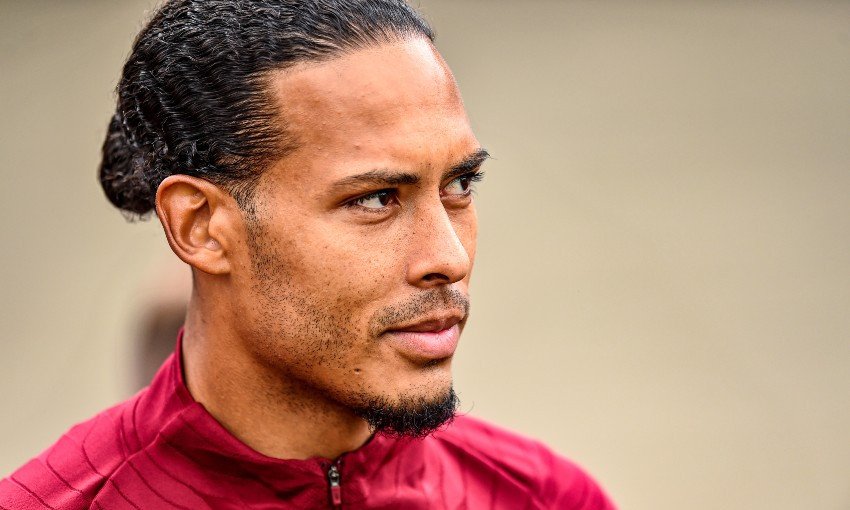
Liverpool defender says ex-players have a responsibility to protect young footballers
Liverpool captain Virgil van Dijk believes pundits go too far and often speak just to “provoke things” and get a reaction from their audience.
A number of pundits have come into the spotlight for controversial statements about players that went viral.
Van Dijk himself has often faced criticism this season due to Liverpool’s poor performances. Wayne Rooney notably commented that the Liverpool squad were lacking leadership amid their poor run of form last autumn, leading to a war of words between the pundit and the club captain.
“For me personally, I can deal with it, but I’m a bit worried for the next generation,” Van Dijk told Sky Sports. “I feel like the ex-top players have a responsibility to the new generation.
“Criticism is absolutely normal and part of the game, and I think it should stay that way. But sometimes criticism also goes into being clickbait, saying things to provoke things, and without thinking about the repercussions for a mental side of players, and especially the younger generation, who are constantly on social media.”
View this post on Instagram
It is not hard to see Van Dijk’s argument, and some of the criticism this season has been strange. Note Paul Scholes and Nicky Butt’s comments, right before a Manchester derby, about how Erling Haaland would pick Lisandro Martinez up like a father picking up his little boy.
And then when their comments were criticised, cue the regular line that players should be mentally strong enough to take the criticism. But this was also a couple of club legends criticising one of the key players of their own side. Shouldn’t those sorts of comments, one would wonder, have been reserved for the opposition, to get on their nerves?
The other side to Van Dijk’s comments about criticism on social media mentally affecting young players is that football is a sport packed with emotion. That is essentially what fuels it. Without the passion, it really is just 22 men on a field kicking about a round object.
The passion provides meaning to the game, brings sense to the nonsense. But the flipside is that people will also be enraged and vent their frustration. Online disrespect may be distasteful, but it may also be impossible to erase from the game.
Footballers do have a lot of privileges for playing the game, but they also have to make some sacrifices, and surely one of those has to be limiting their social media presence? That seems only natural.
“You can say, ‘yeah, you shouldn’t be on social media’ – that’s what I’ve mentioned [to them] loads of times,” Van Dijk continued.
“There is always this thing of when you play a good game, younger players check all the positive praises, but when you have a worse game, and you’re getting bullied all over social media, or you’re getting bad criticism, it can really affect you. I’ve seen that in certain players in the past, and currently as well, because it’s just not easy.
“It’s going to get worse and worse, because the platforms nowadays, with the clickbait and the headlines, everyone is on it constantly.
“I feel like especially the ex-pros, top players, who have been through everything as well, they have this responsibility of protecting a little bit of that side as well. That’s something maybe to look at.”