
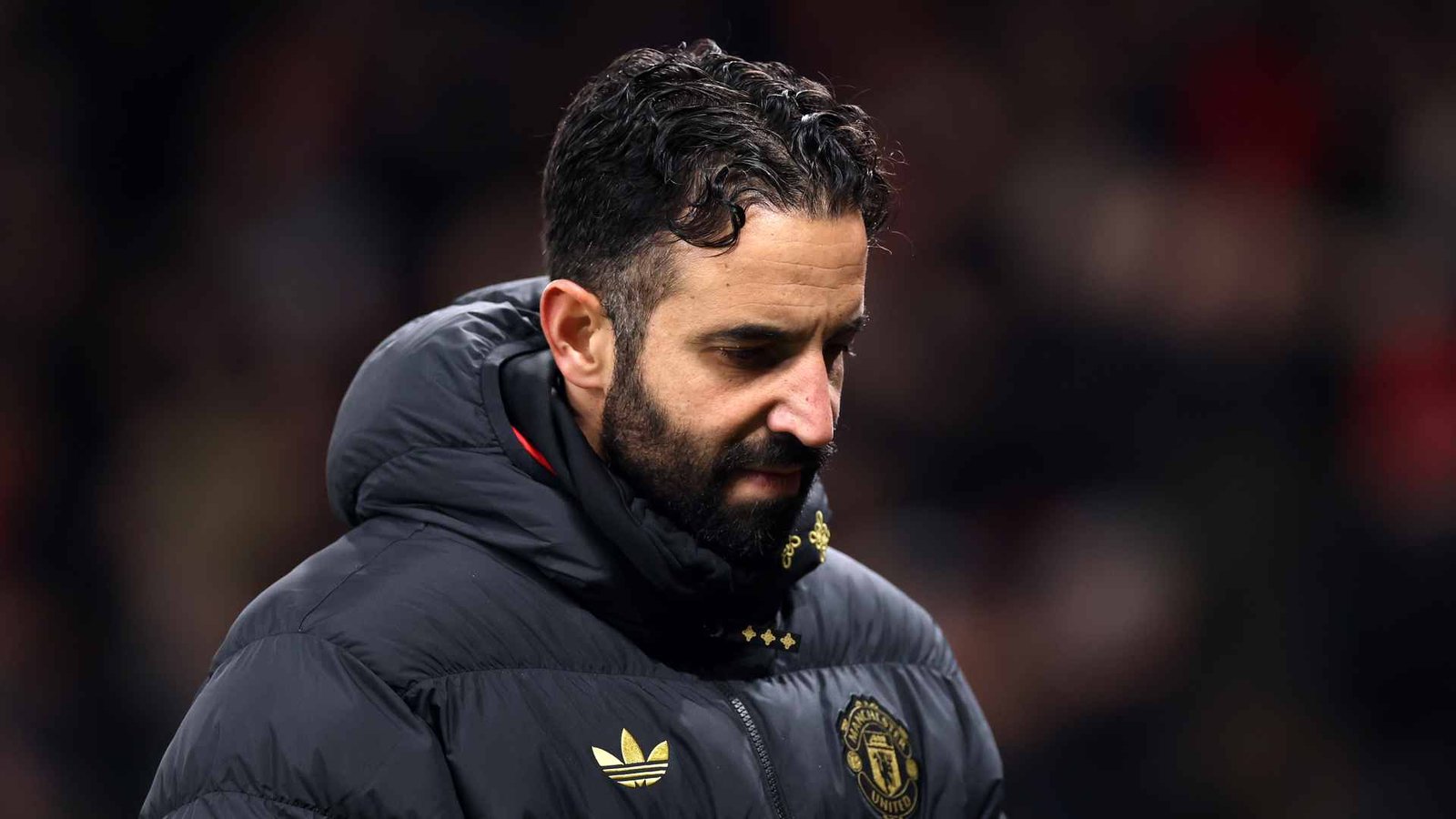
Ultimately the decision to sack the Portuguese came down to a conflict of ideas, with the club disillusioned over the head coach’s rigid adherence to his system
Ruben Amorim has been sacked by Manchester United after a tumultuous 14 months in charge. The manager voted by many to be the first one in the Premier League to be handed the sack this season outlasted Nuno Espirito Santo at Nottingham Forest, Ange Postecoglou at Nottingham Forest, Vitor Pereria at Wolves, and Enzo Maresca at Chelsea.
But what happened, and why now?
The immediate reason was the Portuguese’s an outburst on Sunday after a 1-1 draw with Leeds United, a reaction that seemed to suggest a disagreement with the club hierarchy over transfers.
The Portuguese coach told his bosses they needed to “do their job” after it appeared they were unwilling to release funds to bolster his squad in the January transfer window.
Amorim also said: “I came here to be the manager of Manchester United, not to be the coach of Manchester United,” comments which were baffling given that his official title at the club was head coach.
“I know my name is not Tuchel, Mourinho or Conte but I’m the manager,” Amorim insisted to reporters. “It’s going to be like this for 18 months or until the board decide to change. I’m not going to quit. I will do my job until another guy is coming here to replace me.”
Last week, the United coach said “if we have to play a perfect 3-4-3 we need to spend a lot of money and need time”, and that he was “starting to understand that is not going to happen”. He also said there had been “no conversations” over January additions.
United said on Monday: “With Manchester United sitting sixth in the Premier League, the club’s leadership has reluctantly made the decision that it is the right time to make a change. This will give the team the best opportunity of the highest possible Premier League finish.
“The club would like to thank Ruben for his contribution to the club and wishes him well for the future.”
It appears United did not want to sanction the signings Amorim wanted in the winter window, even though they had apparently been willing to sign Bournemouth’s Antoine Semenyo, who is now Manchester City-bound. The reason seems to be that while Semenyo was thought to fit the profile United felt was right for the club for the future, regardless of who the manager was and what system they played, they felt Amorim’s interests were specifically for his preferred 3-4-3 formation and may not have suited the next head coach, whoever they may be.

Ever since the tenure of Erik ten Hag, who signed players who had previously played under him, United have been reluctant to make recruitment based on the vision of a single manager, rather than the overall vision of the club itself. It is understood that all of their signings since the January window of 2025 – namely, Patrick Dorgu, Bryan Mbeumo, Matheus Cunha, and Benjamin Sesko – are players who can play under any manager and any system.
Ultimately the decision to sack the Portuguese came down to a conflict of ideas, with the club disillusioned over the head coach’s rigid adherence to his system. He may have been told in recent weeks he needed to be more flexible, and in fact the club believe he had agreed from the start to adapt his system once the players had grown into it.
Amorim has been severely criticised in the media over his rigidity. Former midfielder Paul Scholes has said the Portuguese “doesn’t get the club”, while Gary Neville and Jamie Carragher have also been quite vocal, with the latter saying the 40-year-old was “not good enough” to be Manchester United coach.
It appears these comments have weighed down on the United hierarchy and begun to influence their patience towards Amorim, leading the head coach to react in the media on Sunday by saying that “if people cannot handle the Gary Nevilles and the criticisms of everything, we need to change the club”.
The United hierarchy insist that Amorim has been given 100% backing and that his removal is due to his inability to tactically evolve, even when he had initially agreed to, and especially given that results have not been in his favour, according to people familiar with the club’s thinking. Amorim’s United have been stuck in sixth place for weeks, and have repeatedly failed to take opportunities to enter the top four when rivals have struggled. These setbacks have come in games considered winnable, including against Everton, West Ham, and Wolves at home.