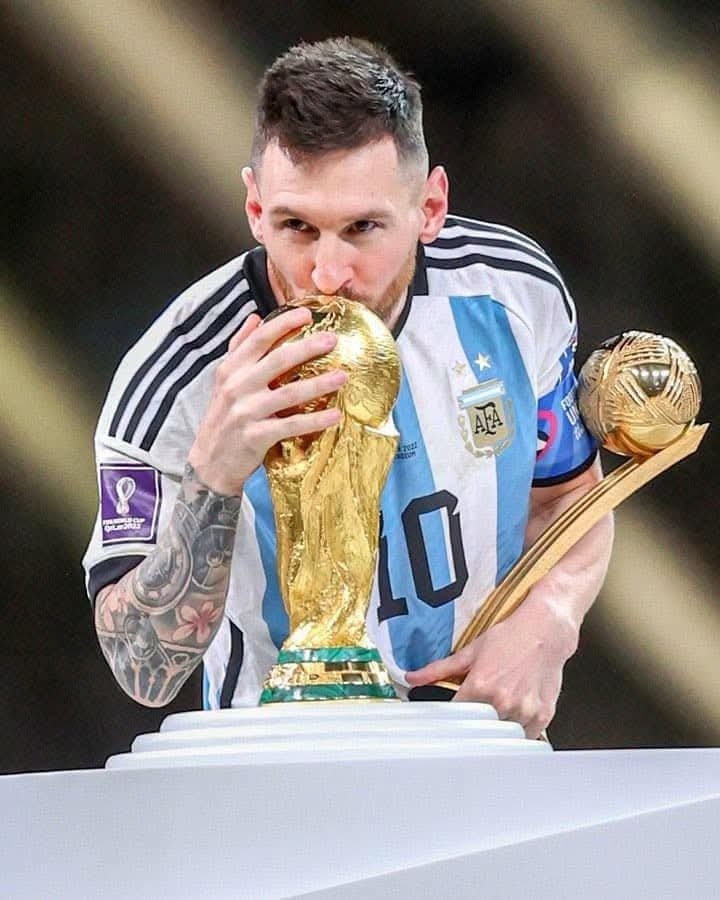
Did Messi owe his World Cup win to Barcelona and Angel Di Maria? A deep dive yet controversial take on how club success and key partnerships made Messi’s World Cup dream come true.
Lionel Messi is widely regarded as the greatest footballer of all time, a genius whose left foot has rewritten history. But even legends need pillars around them that shape, support, and elevate their greatness.
In Messi’ case, these pillars are both individual and institutional. Messi has been regarded as a system player. whether that is true or not up to you but then, he’s been surrounded by pillars for a good part of his career.
At club level, Barcelona was a system that made Messi thrive but on the international level, Di Maria was key to all of Messi’s success with the Argentina national team.
This is where the controversy begins.
Messi may be the face of Argentina’s success, but the truth, however uncomfortable for some, is that he doesn’t win a World Cup without Di María or at least get his first national team success.
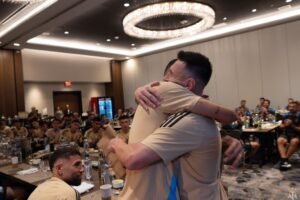
Messi won’t become the all-time phenomenon, without Barcelona. That combination of one man and one club formed the foundation upon which his national team greatness was built.
Before the glory came years of heartbreak.
Three straight finals, 2014 World Cup, 2015 Copa América, 2016 Copa América Centenario, ended in defeat. Messi was blamed for everything. The pain was so deep that after the 2016 final, he briefly retired from the national team. Argentina was collapsing under expectation, and Messi was carrying the weight of a football-obsessed nation on his back.
But he returned, determined. And when he returned, something crucial changed, Ángel Di María became the sword beside Messi’s shield.
If Messi was the soul of Argentina, Di María became the spark. It was Di María who turned finals from nightmares into triumphs.
The 2021 Copa América final against Brazil at the Maracanã, Brazil’s fortress, Argentina needed a moment of audacity. It came from Di María.
His delicate lob over Ederson was not just a goal; it was an emotional moment for both players and nation. Messi wept on the pitch as Argentina finally ended its 28-year trophy drought.
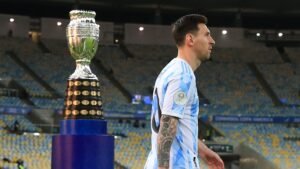
Messi won the Golden Ball, but the decisive blow came from Di María.
Without that moment, there is no turning point.
Without that turning point, the 2022 World Cup never happens.
Di María, once criticized as inconsistent, became the man of finals—the partner Messi always needed.
In 2024, Di María once again proved why Messi calls him “un fenómeno”. As age crept in, he became more selective, more tactical, more intelligent. Yet his ability to find Messi, stretch defenses, and offer that unpredictable chaos remained unmatched.
He created spaces Messi needed.
He provided the runs Messi could thread passes into and he ran till his legs gave out. When it mattered, he delivered again, another crucial assist that kept Argentina alive deep into the tournament.
Messi lifted the World Cup, but in the shadows stood Di María, the man who shaped Argentina’s destiny in finals for over a decade.
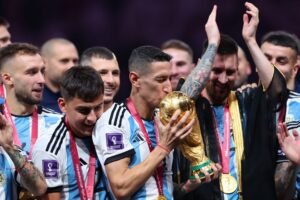
But the story cannot be told without Barcelona. Without La Masia, without the system, without the philosophy, without Guardiola, and without a club that built itself “around” him, Messi doesn’t become the player who leads a nation.
Barcelona gave him tactical education.
Barcelona gave him confidence.
Barcelona taught him positional intelligence.
Barcelona surrounded him with the system that sharpened his instincts into genius-level speed.
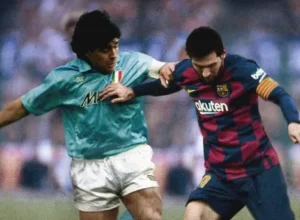
Messi learned how to dominate matches in the Barcelona structure and when he played for Argentina, he showed it. Scaloni reintroduced a version of Barcelona’s positional play.
Messi, liberated, became himself again.
Argentina suddenly played like a team built to maximize him.
So yes—Barcelona didn’t win the World Cup for him but Barcelona made the Messi who eventually could.