Are football pundits like Neville, Paul Scholes, and Carragher simply biased ex-players, or do they bring valuable insights? Discover the truth behind the media narratives shaped by former football stars.
Media narratives matter a lot in football. Whether you believe it or not, they shape how fans think and how rival fans see other clubs.
Just like in the real world, where the media shapes people’s reasoning, media narratives do the same in football, and some of the biggest connoisseurs of media narratives in football are ex-pundits.
In this age of social media, the easiest place to have a career once you’re retired as a footballer is in media houses. The pipeline from professional football is one of the most-treaded career paths by ex-footballers. Footballers and sometimes coaches serve as pundits on popular broadcasting channels, giving football analysis.

But as much as footballers have become familiar faces in the studio, the question keeps coming back. Are they just biased ex-players? Or do they genuinely bring balanced insight to the game?
Because while punditry is supposed to explain football to fans, it often feels like ex-pros use the platform to protect old teammates, rival old enemies, and in some cases, rewrite narratives in favour of their beloved clubs.
Yet, not all ex-players who serve as pundits fit into the same box. Some carry bias like a badge; others use their experience to provide sharp, authentic football analysis.
For me, this question doesn’t have an exact yes or no answer. It’s a tale of two sides that we need to look at.
The Bias: When Loyalty Clouds Judgment

More often than not, the first accusation thrown at ex-players turned pundits is that they’re biased, and in many cases, the evidence is right there on the screen. Jamie Carragher, for instance, has often been at the centre of this debate.
Carragher is Liverpool through and through. A local lad, a club legend, and a passionate representative of Anfield. But that passion sometimes spills into punditry in ways that make neutrality impossible. Whether it’s his constant jabs at Chelsea’s spending or his tendency to defend Liverpool’s struggles as “transitional phases,” Carragher often gives the impression of a man wearing red-tinted glasses.


When Chelsea spent big under Todd Boehly, Carragher was one of the loudest critics, calling out the club’s lack of structure, culture, and direction. Fair points, yes, but when Liverpool spent heavily on players like Darwin Núñez or broke the bank for midfield reinforcements or even bought two of the most expensive striker signings in the Premier League, the tone shifted. Suddenly, it was “ambition” and “a necessary rebuild.”
This is the kind of double standard that fans pick up on easily. Bias isn’t always about hate. Sometimes, it’s about selective empathy.
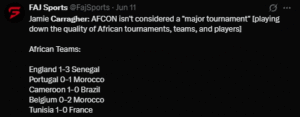
Carragher’s punditry, for example, mirrors what most fans do daily: defend their own and critique everyone else. But when you’re on national television shaping narratives, that bias carries more weight. We can’t forget his comments on AFCON, on national TV.
Gary Neville, too, has danced this line for years. His loyalty to Manchester United often shines through, especially when Manchester United are under criticism. Like Carragher, his insight is valuable, but his allegiance can colour his takes.
Graeme Souness is also a party to this. He is known to be heavily biased on certain topics.
The Other Side: Honesty and Experience
When I said the answer to the question isn’t an exact yes and no, I said that because there are ex-players as pundits who actually manage to maintain a sense of objectivity, even when their loyalties are well-known.
Their analysis is spot-on, at least most times. They give credit where it is due, and even when fans of the club they support will give them stick for it, they say the harsh truths.
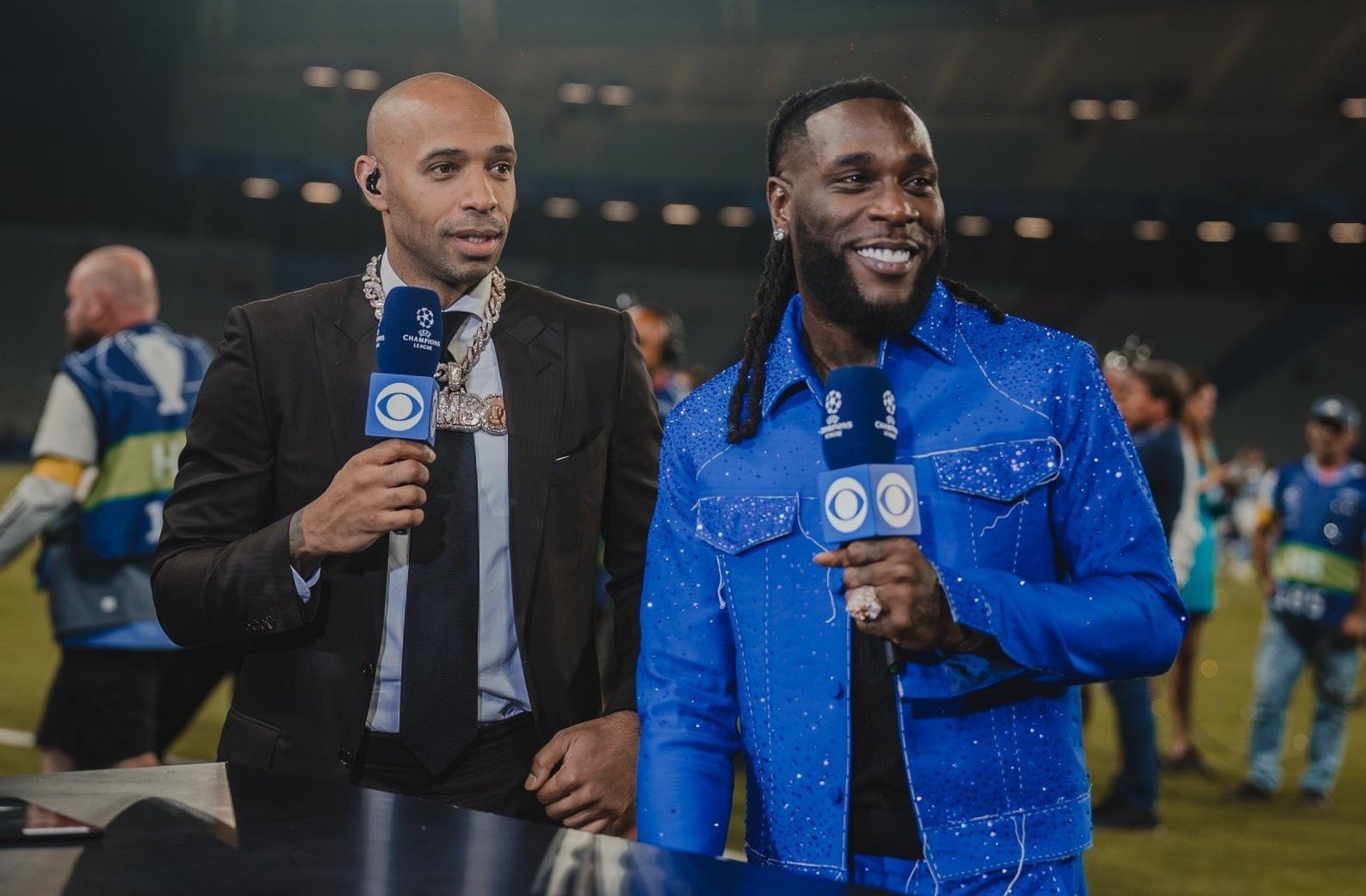
Thierry Henry, for example, has made punditry look like an art form. His delivery is calm, deliberate, and sharp. Whether discussing Arsenal, Barcelona, or the Premier League as a whole, Henry rarely allows emotion to cloud his judgment. When he praises, it’s measured. When he criticises, it’s constructive. And that’s what separates him from many of his peers.

The same goes for Ian Wright. Wrighty wears his heart on his sleeve. Everyone knows how much Arsenal means to him, but he’s also fair. He calls things as they are, even when it’s uncomfortable. His criticism of Mikel Arteta’s early managerial struggles or Bukayo Saka’s occasional inconsistency never felt like attacks; they were observations rooted in love for the game and honesty for the audience.

Joe Cole also fits into this category. His commentary is tactical, player-focused, and honest. When Chelsea performs poorly, he says so. When opposition teams outplay them, he gives credit where it’s due. He doesn’t try to spin narratives or protect the club at all costs. That’s what makes him stand out. He, just like the other, finds a balance between passion and professionalism.
These pundits remind us that ex-players can be more than just biased voices; they can be guides, educators, and storytellers.
The Thin Line Between Bias and Passion
To be fair, punditry was never supposed to be sterile or entirely neutral. I don’t think you can always be correct as a pundit because football itself is emotional, and part of what makes ex-players compelling pundits is their ability to draw from their lived experience.
When Carragher rants about defending, it’s because he’s been there. When Neville talks about United’s dressing room mentality, he’s recalling what made them serial winners. Arsenal fans don’t always agree with Henry, especially when he criticises Arteta.
The problem isn’t passion; it’s when passion becomes propaganda. Fans can tolerate a bit of club pride. They expect it, even. But they want balance. They want pundits who can separate emotion from analysis, even if their heart lies elsewhere.

The modern audience is smarter, too. They notice agenda-driven analysis and aren’t afraid to call it out. Social media has made punditry more accountable. Every biased comment becomes a viral clip. Every contradiction gets replayed.
In today’s landscape, pundits can’t afford to just be “biased ex-players.” They need to evolve. Football pundits need to provide insights, be passionate and also stand firm when they say things the audience won’t agree with.
All of this brings balance because just like football, I don’t expect pundits to be perfect. There are nuances to opinions. However, the important thing is to be as logical as possible, and this is how pundits can change football narratives.
Wise wrote this article.